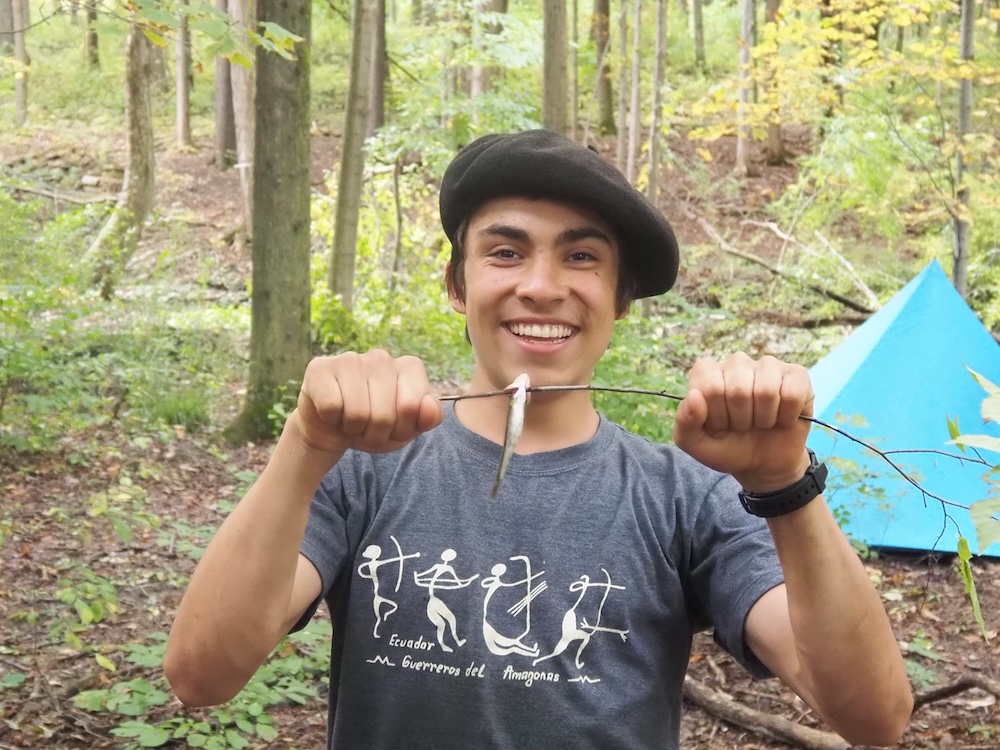
2026 Roaring Canyons Blog #2
The river of our story flows unstoppably onwards, and too soon it is time to recount the memories of the past several weeks. Time has slipped through our fingers like red desert sand, bringing forth so much for me to share.
 Rewinding the clock to the point where I left off, we enter the hustle and bustle of the laborious preparations for our Western odyssey. Tempers are short as piles of work threaten to rival the Rocky Mountains. Though we are so close to the start of our journey, at times it feels as though we are hundreds of miles away. Every afternoon is spent planning, packing, and laying out multitudes of gear for the next two and a half months. Not even a single carabiner can be left behind.
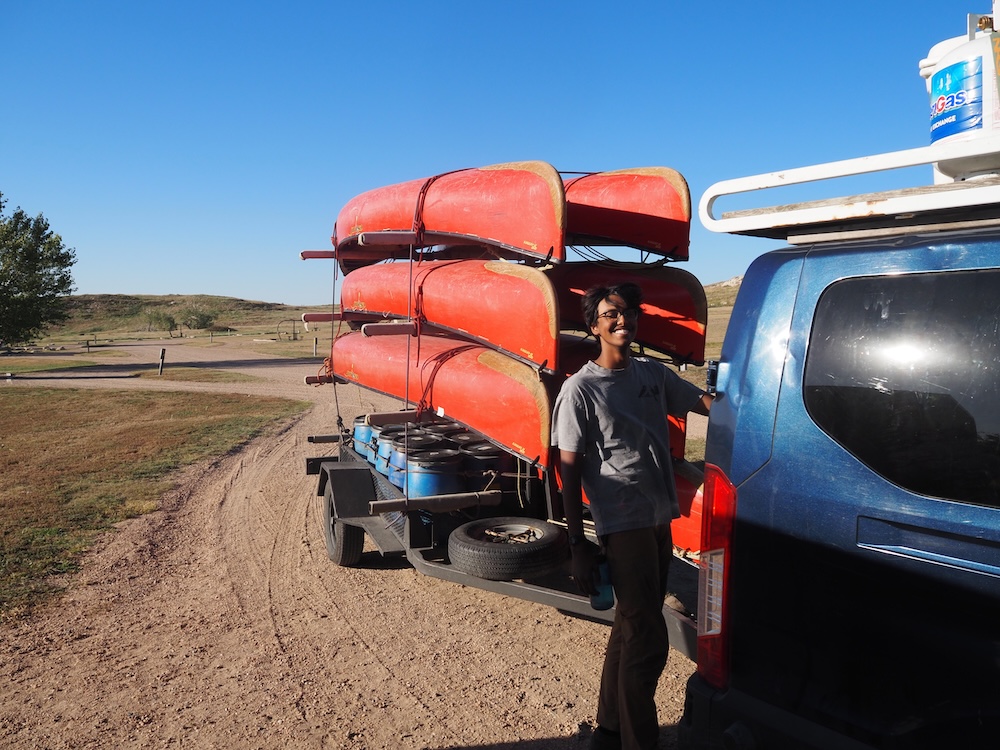
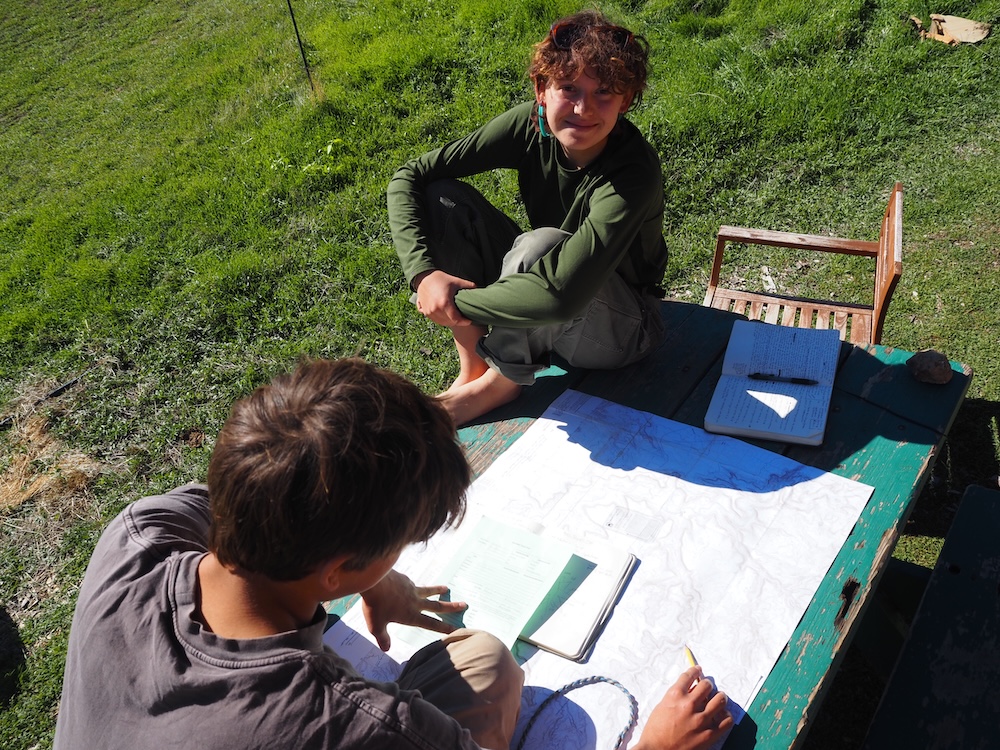 During the morning hours we exercise, putting just as much preparation into our bodies as we have our gear. When the constraints of time allow, and we bring ourselves to wonder if we might have some free time, we are instead faced with academics, ever broadening our minds for the West. Needless to say, the final week spent at Basecamp is long, and everyone is relieved when the last rope is tied down to the trailer, and the gear safely stowed.
 On September 28th, at the glorious hour of 5:00am, we shuffle sleepily into the van, sleeping bags in hand, and pack ourselves in like sardines in a can. Soon we will be accustomed to rising before the first tendrils of light dare to thread across the sky, but in the moment, there is much grumbling as we load ourselves clumsily into our seats. Most people blissfully return to sleep, but every day three students will rotate through the role of Navigator. The hours are long for whoever gets to decipher the road atlas first thing in the morning, but still it is well worth it. It is a beautiful time to be alive, awake before the sun rises.
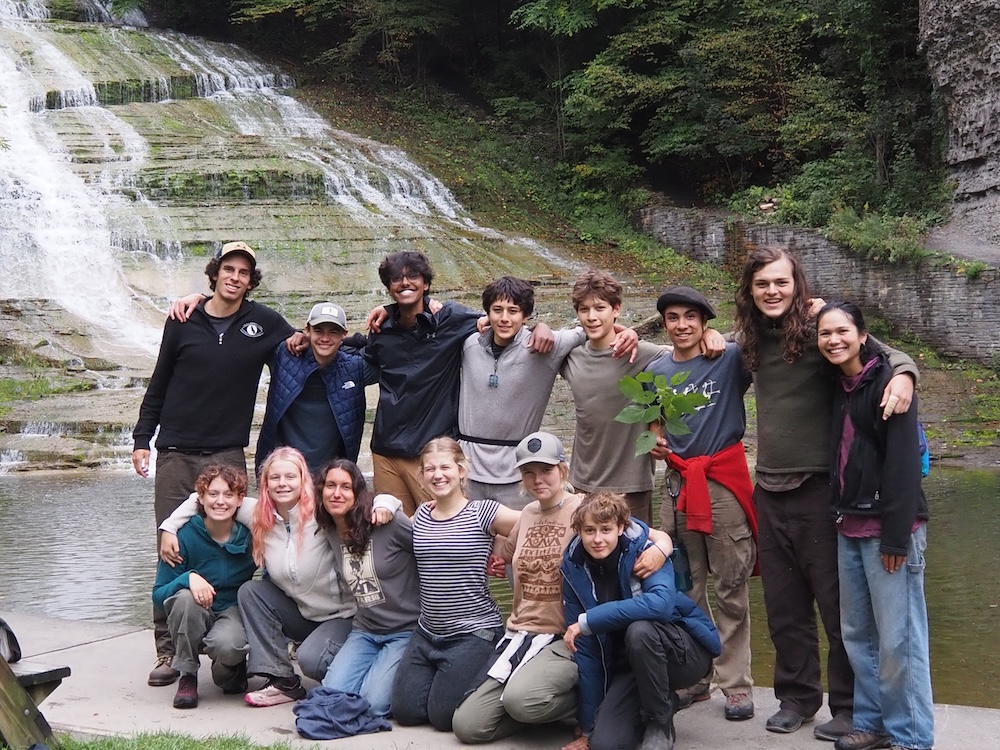
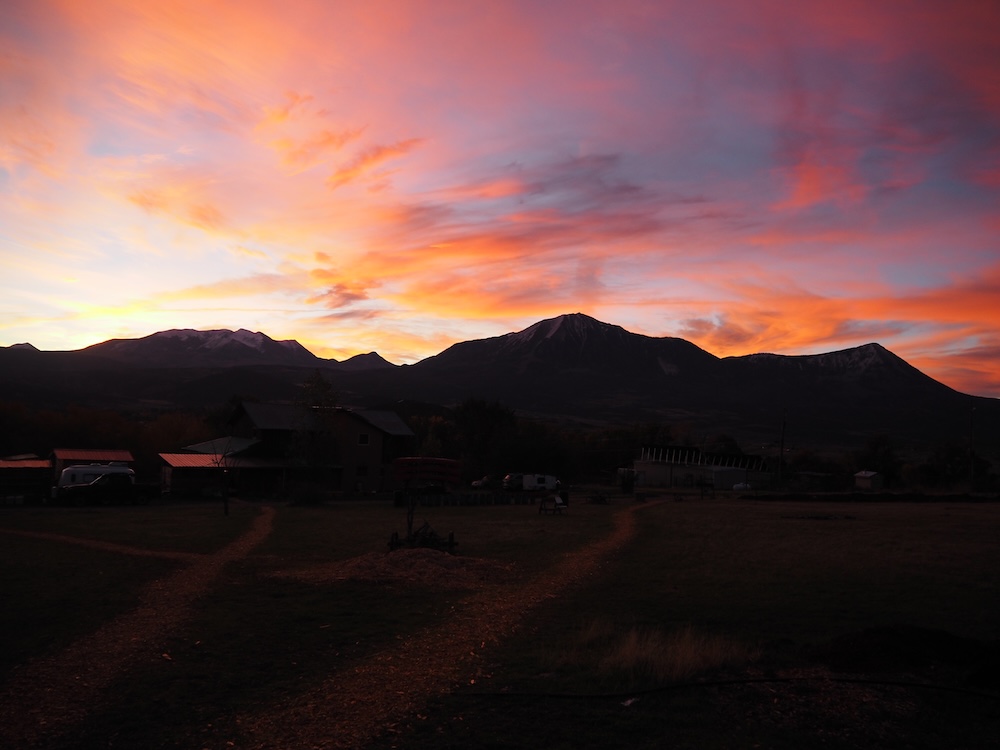 First we drive to Ithaca, New York, stopping at a Montessori school along the way and presenting about our journey to the middle schoolers there. Eventually, we camp in the woods behind a beautiful farm belonging to a man named Harry. Sitting in the van has grown tiresome, and everyone is eager to expel some pent up energy when we finally pile out onto the dirt driveway. Camp is set up boisterously, until one of our team members has to depart for a minor medical issue. After that, a level of somberness descends, as many of us reflect on the precarious nature of participating in a remote wilderness expedition. Life is unpredictable and takes us in unexpected directions. [The sick student would be cleared to return to the field two days later, and rejoin the group in Utah.]
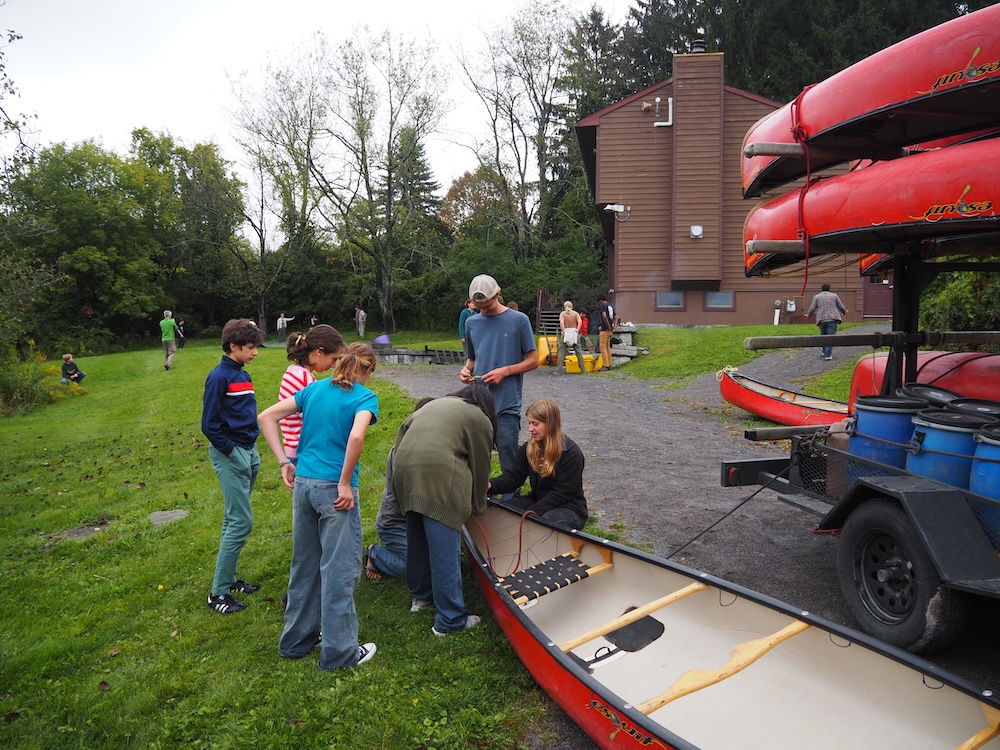
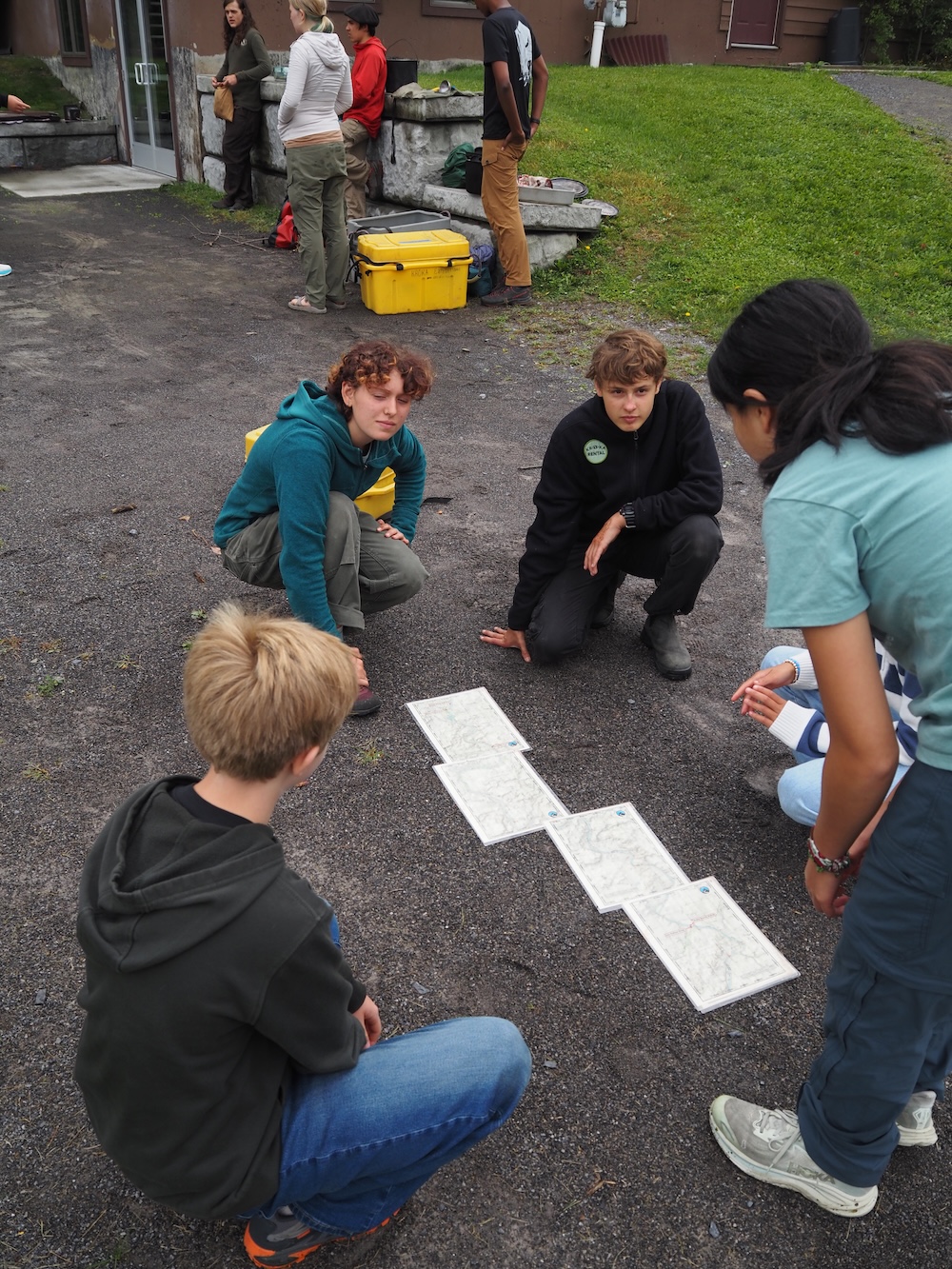
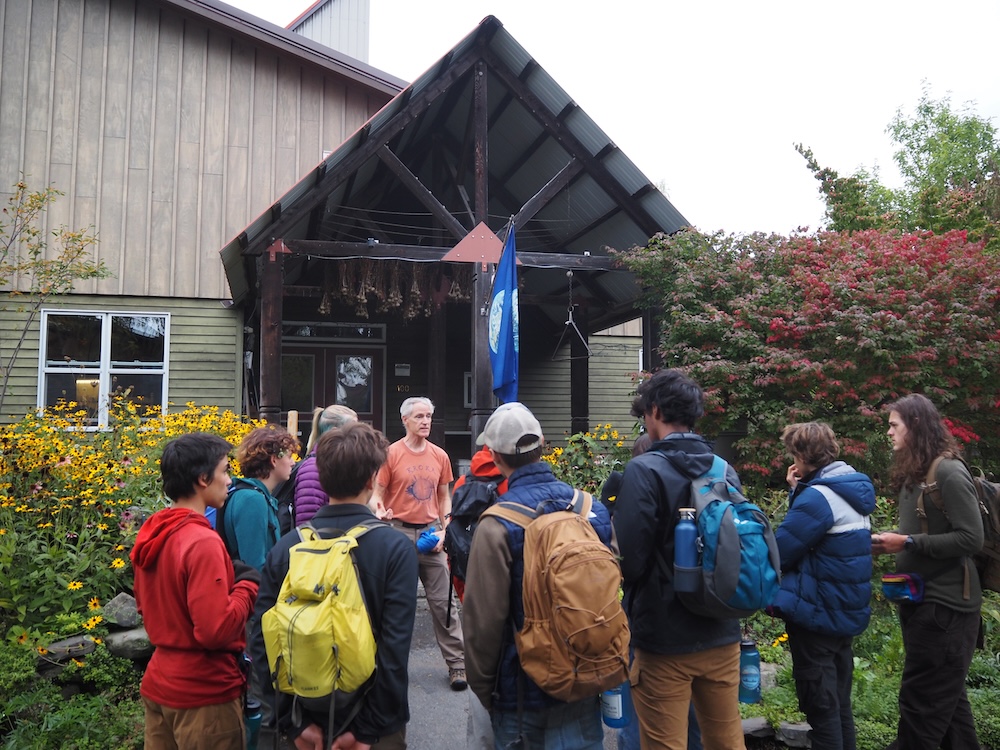 The next day feels odd, with our numbers reduced to eleven, though we still really enjoy Harry’s gracious tour of his farm. We learn a lot about the iron-clad grasp of the agricultural industry, while eating tasty sea berries and autumn olives picked straight from the tree. That afternoon we also tour Ithaca’s eco-village, where we learn about sustainable living, and enjoy the beautiful gardens interspersed between the architecture. It’s an inspiring place, as are all the people we meet there.
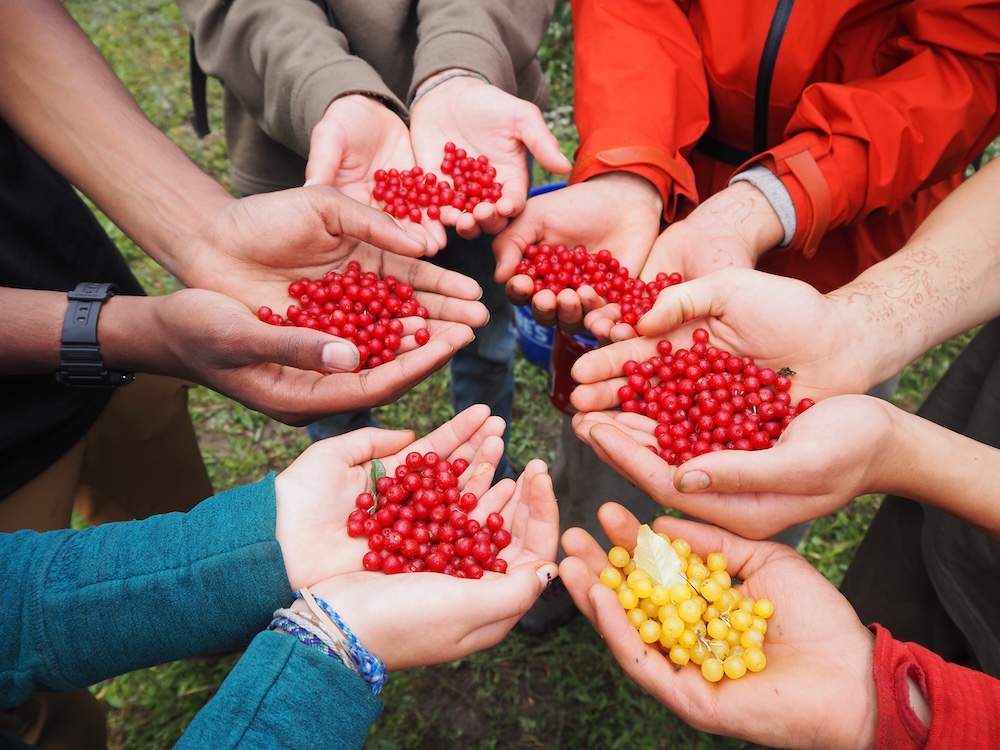
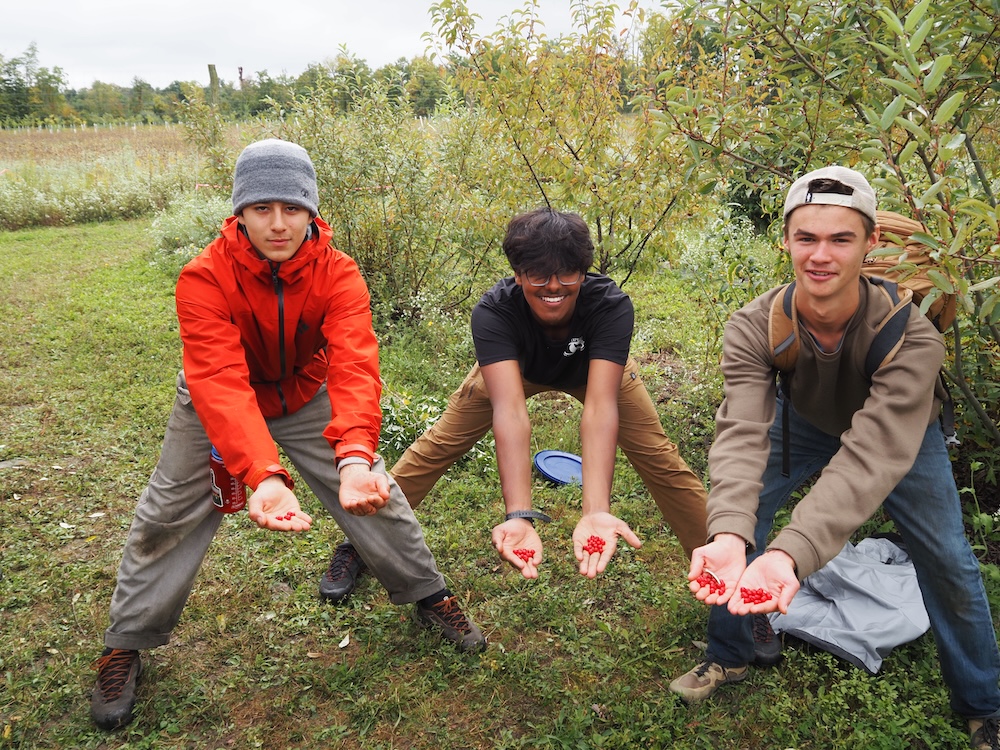
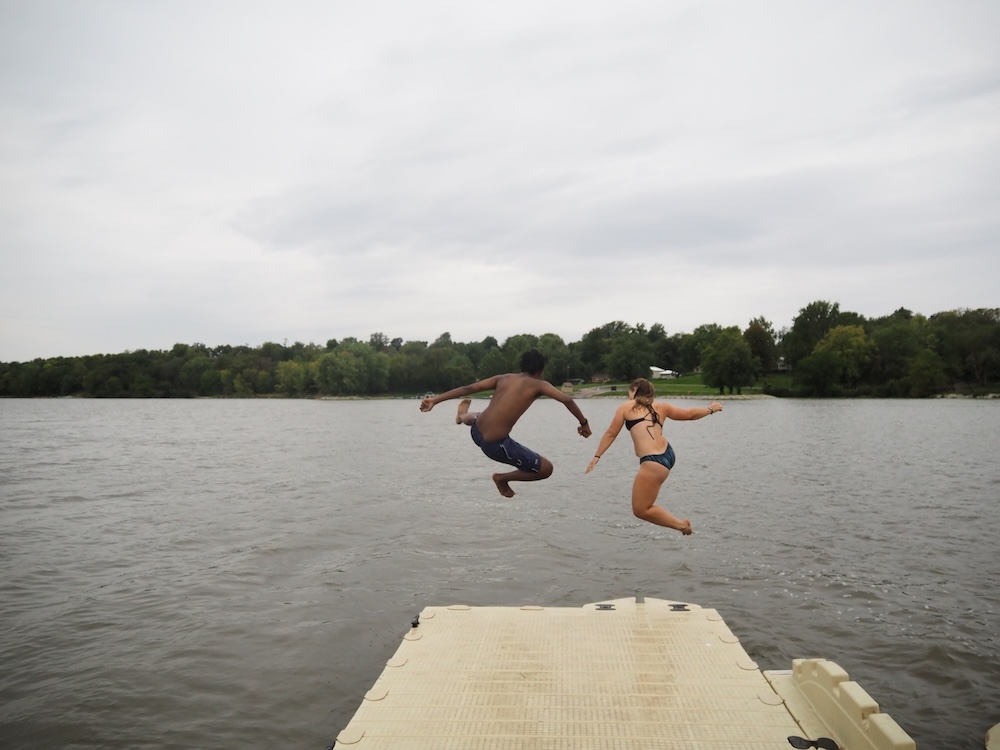
When seated in a moving vehicle, rather than traveling on foot, it’s almost eery how quickly the miles pass. Plants blur together, morphing from old friends into unidentifiable streaks. And if you pay attention for only a short while, they change again and again until nearly all is unfamiliar. Harrison Lake, Ohio brings forth sumac, wild autumn olives, and murky water that reminds us of the many current threats to our ecology. Rain follows us wherever we go, as if we are somehow connected to the storm. As we travel yet another five hundred miles to Grinnell, Iowa, both the drizzling clouds and Great Blue Herons seem to have hitched a ride on alongside the boxes of canyoneering gear on the roof rack. These majestic birds have been our constant companions wherever there is water, as we migrate across the vast expanses of the United States.
As we make our way into the midwest, our eyes are met with seemingly endless rolling cornfields. It’s awe inspiring, and yet it also brings a sense of sadness. There are few trees, just the monotony of a single crop that will be used largely to feed the meat and dairy industries around the US. Small farms don’t seem to exist here: just this great, industrial emptiness and an endless stream of cars and semi trucks.
 On our way to Iowa, we stop on the sandy shores of Lake Michigan, where we are met with another vision of infinity. It appears as though we are standing on the precipice of an ocean, yet we are far from the sea. The rocks here have been ground down to smooth pebbles by the churning waves, and range in color from black to pink to blue-green. By the time we load back into the van, our fannypacks have become suspiciously heavy.
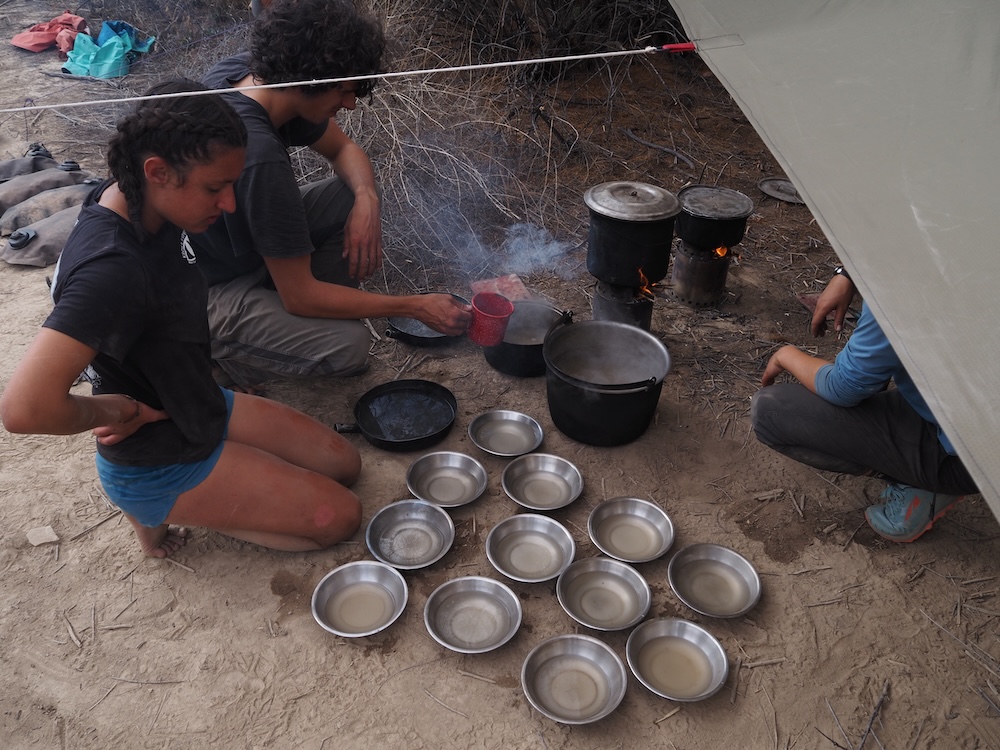
Later that day we decide to adventure into the World’s Largest Truck Stop, where we get a hefty dose of culture shock. If you could capture the essence of modern day industrial America into several giant buildings, it would be this place. Fast food restaurants fill every corner, and the walls are lined with things to buy. Naturally, we decide the best move is to have a trail lunch at a Wendy’s table. It’s a joyous experience, spreading rehydrated hummus powder and crumbly Vermont cheese over Wasa crackers, while normal civilians look on in mild confusion and with some amusement. It gets even better when we hold hands in a circle and sing I’m a Wild One, fighting shy giggles. The cherry on top of this bizarre day is when we realize there’s spare money in the trip wallet to buy each of us an ice cream cone from the Dairy Queen.
It’s amazing how living simply can bring such joy to small things we would have taken for granted before Kroka.
From Iowa we drive to Sterling, Colorado, where the hills have begun to return and the first hints of desert are upon us. The air is dry, the plants are spiky, and excitement runs rampant. We have navigated through the heart of the maize maze, despite the questionable skills of our navigators, and suddenly we can feel the brilliant rays of adventure in the Western sun beating down on us.
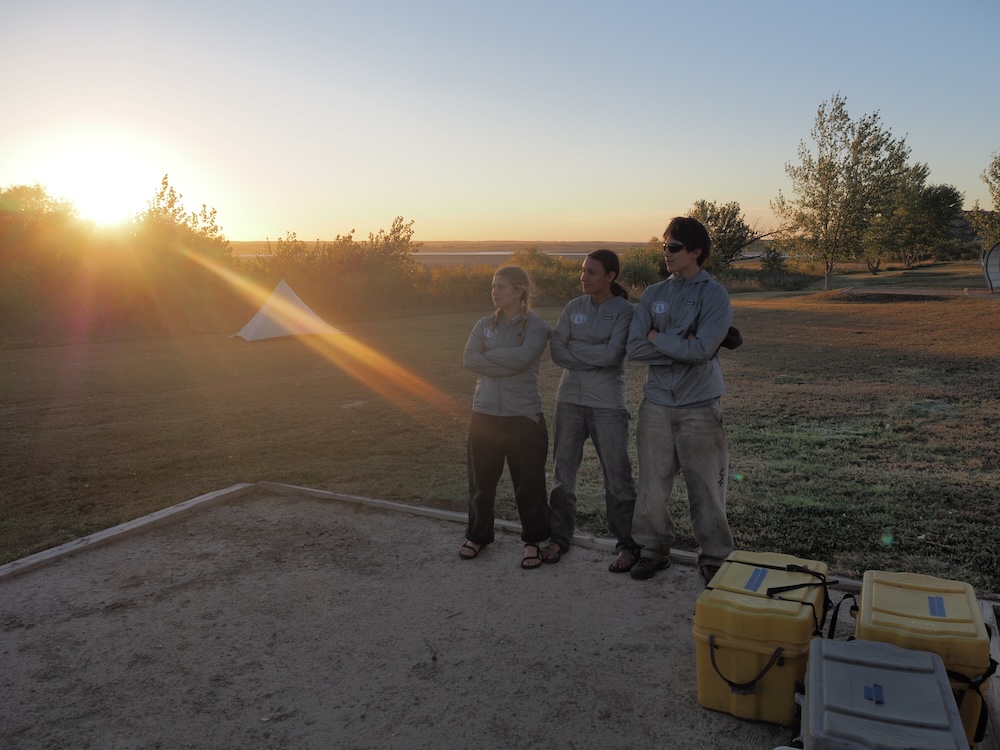
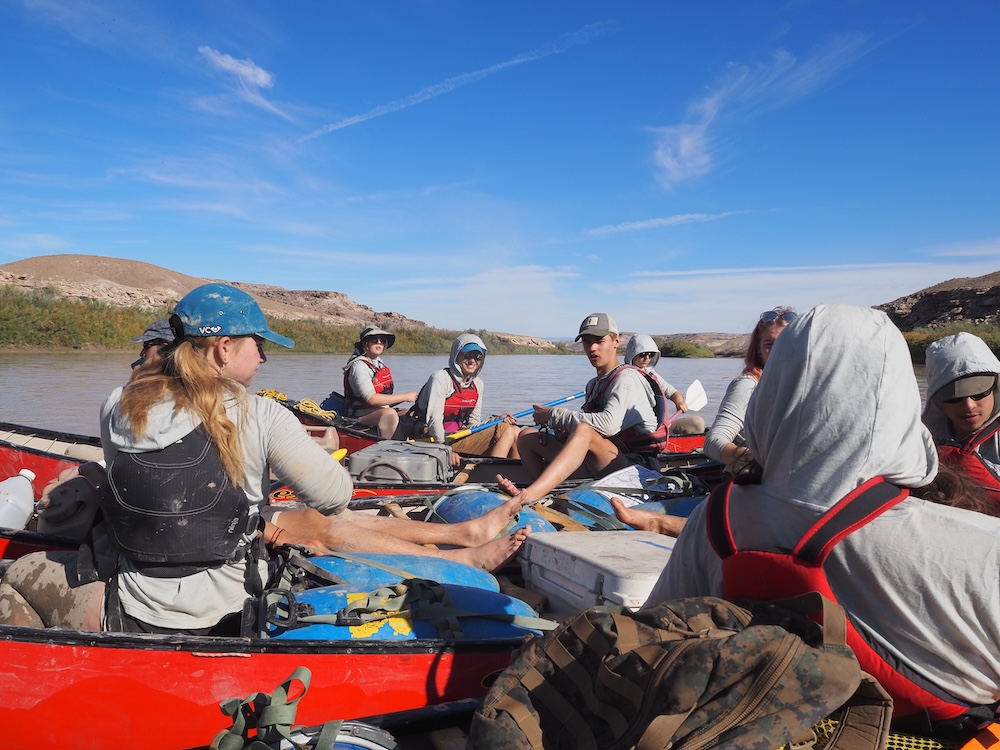 Our final day of our journey in the van brings us through the jaw dropping peaks of the Rockies and into Green River State Park, Utah. Here, in the heart of the West, you can almost feel the strength of the cottonwood trees and sense the uninhabited canyons ahead. We layover here, and eleven becomes twelve with the return of our missing group member. The hand of chance leads us to meet a group of much older paddlers with dory boats, who tell us stories of their river running adventures, and insist we help them eat their copious food.
 Later, we explore the John Wesley Powell museum, and learn all about the first expedition down the Green and Colorado Rivers. The land is steeped in history here, from the rocks to the dinosaurs to Native Tribes, and eventually to the explorers determined to meet the foaming rapids. It’s a place of ghosts within the canyons, and we are about to enter the twisting labyrinth of mud and stone ourselves.
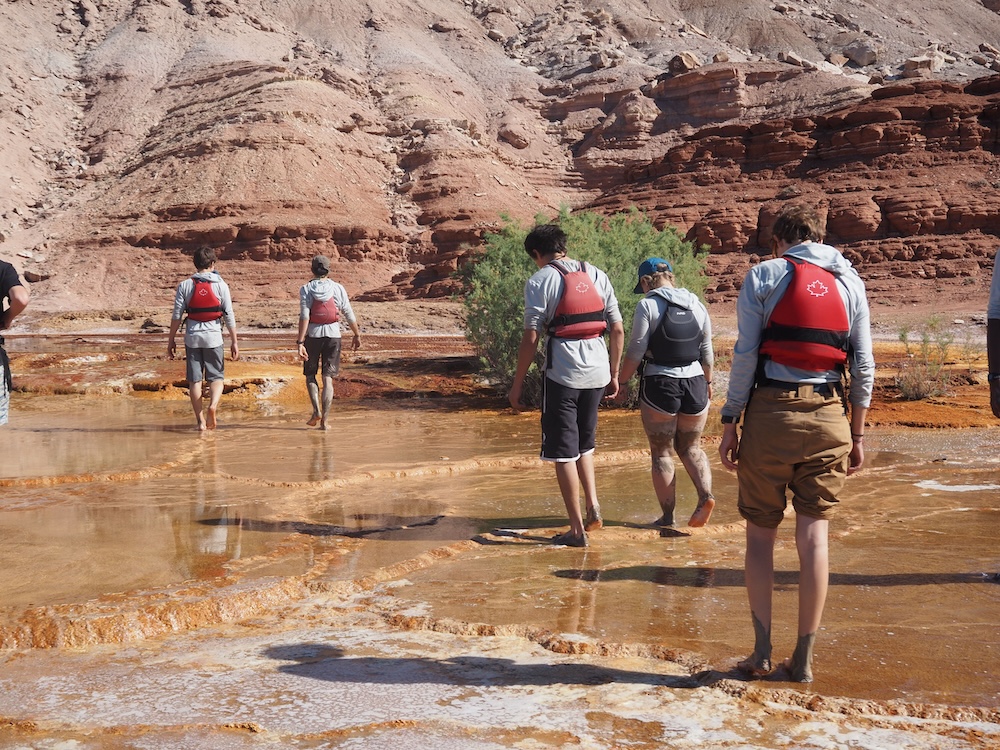
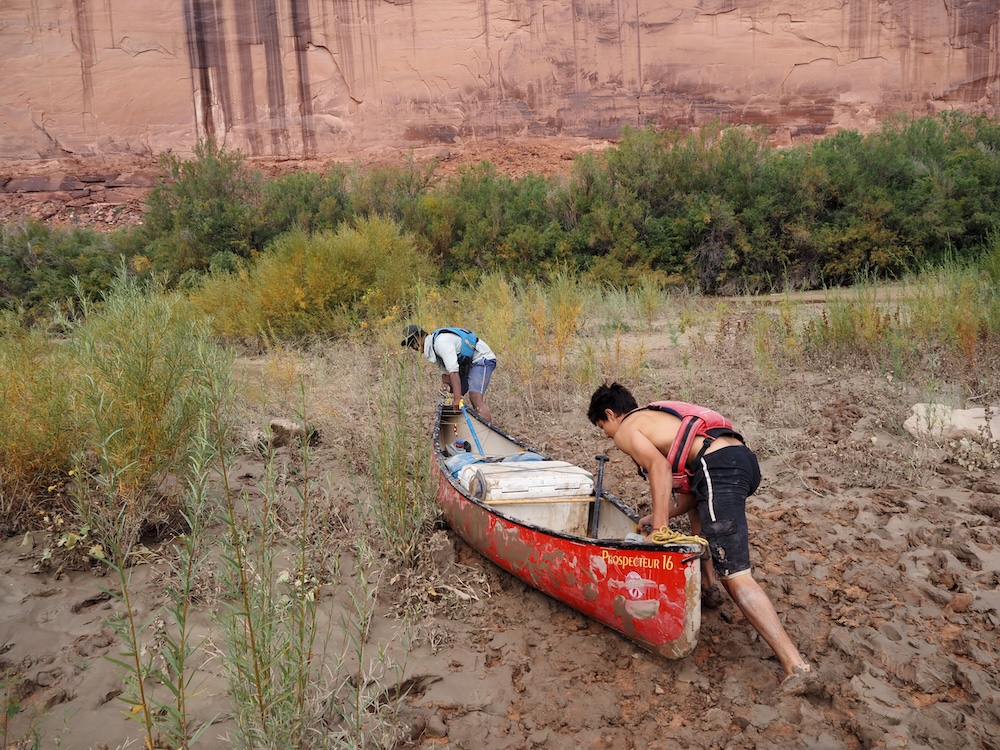
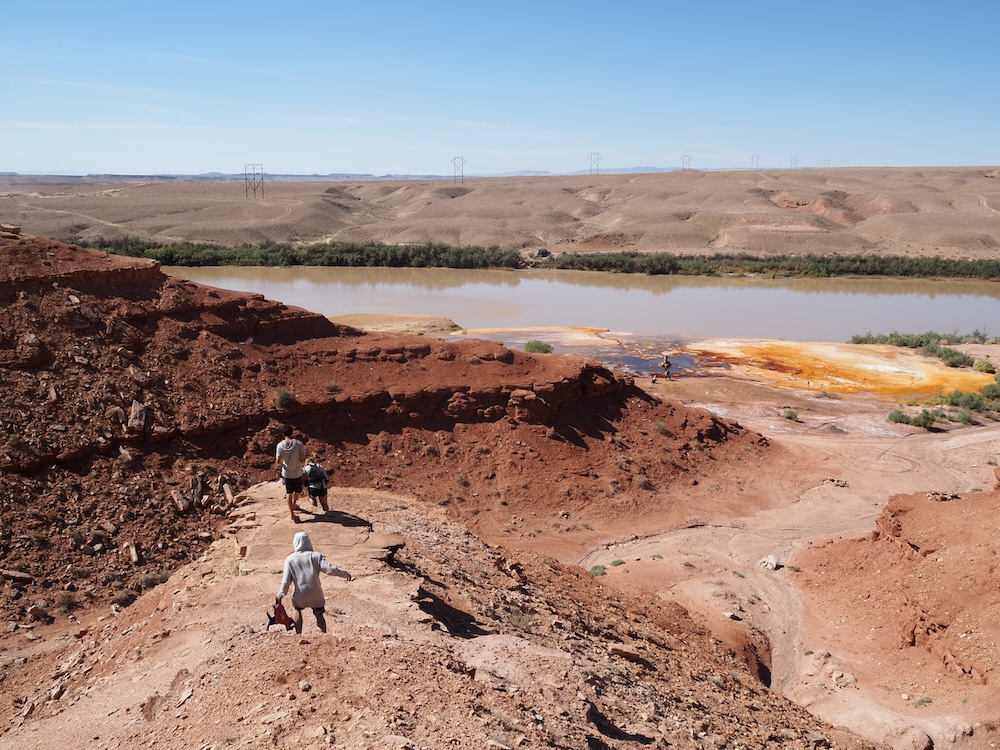
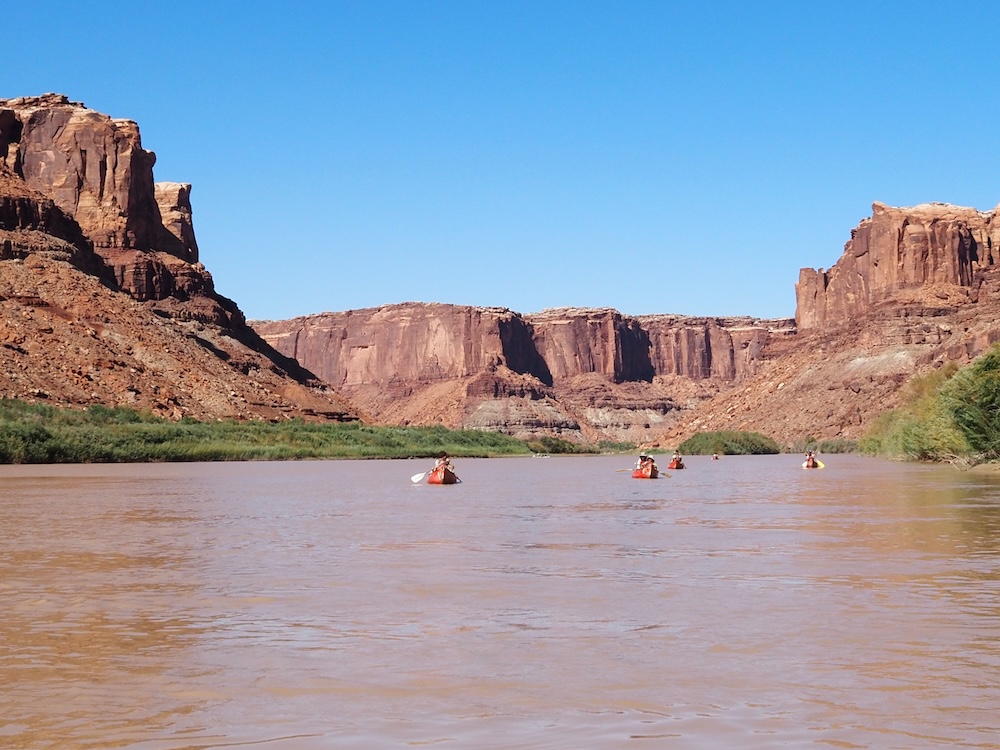 When we finally push our last canoe off the bank and into the light brown waters of the Green River, it’s as if the final piece of a puzzle we’ve been building for weeks has fallen into place. Our first stop is a brilliant geyser five miles downriver. The stone here is a sulfurous yellow, interspersed with dark orange and brick red. But, before we can properly explore our new surroundings, we are faced with a new friend: mud. Not New England mud that might lazily try to steal a shoe, but slick, smooth, thigh-deep mud that glistens along the banks of the river and threatens to swallow anything that we drop.
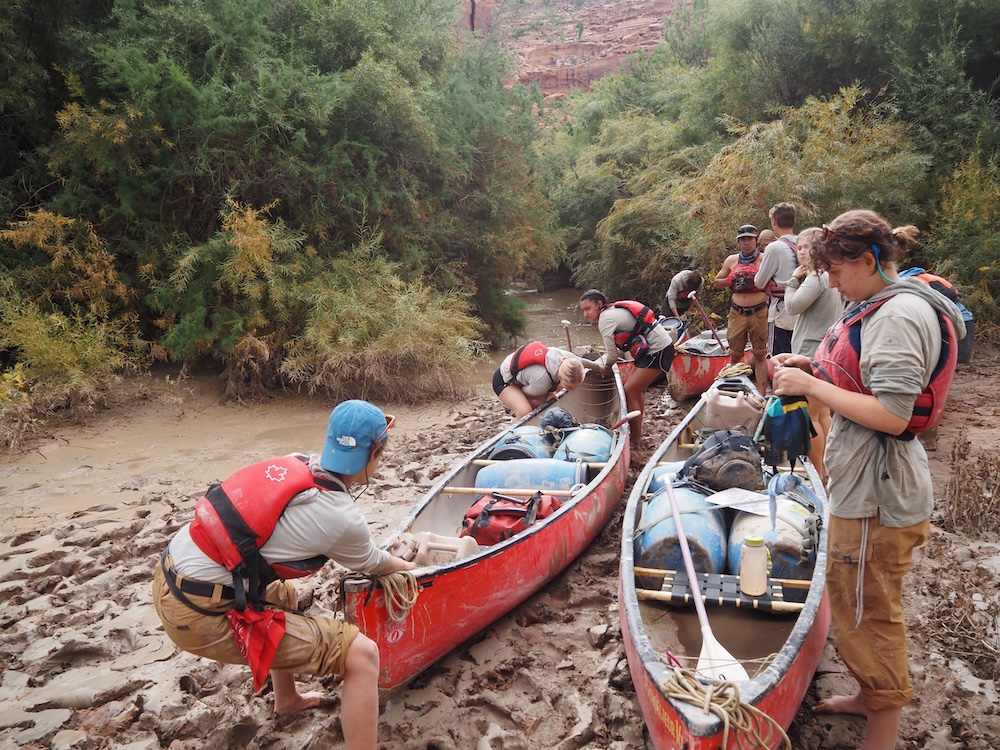 Mostly, we greet it with joy, wallowing in it while grinning ear to ear. Our canoes have never been dirtier. We plot to take them through a car wash at a later date. Eventually, we manage to pull ourselves up onto the bank, and explore the wonders of color and stone. When the geyser fails to spew, we instead scale the rocky slopes, eyes the size of quarters, taking in the beginning of a world that feels as though it belongs on another planet.
A few miles further, and we camp by a cottonwood tree big enough to provide shade for us all. A tree of life, it seems, amid this arid climate. Most of us have taken to cowboy camping, where we lay to rest beneath the magnificent Milky Way. One could say a more beautiful night has not been seen, and yet each one surpasses the last in its grandeur.
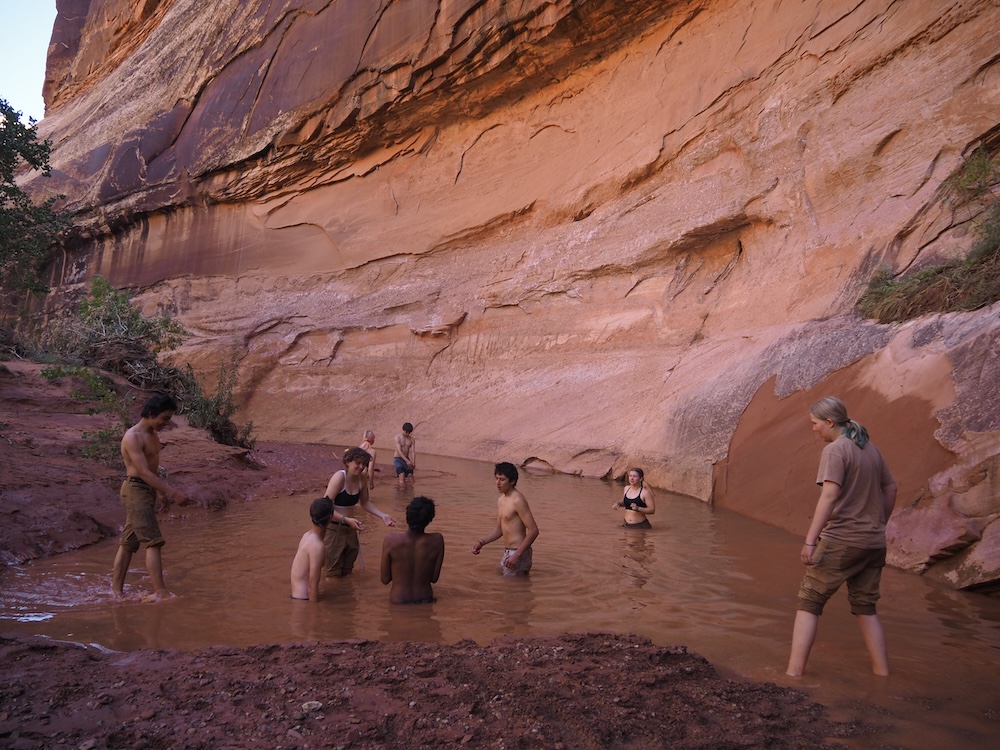
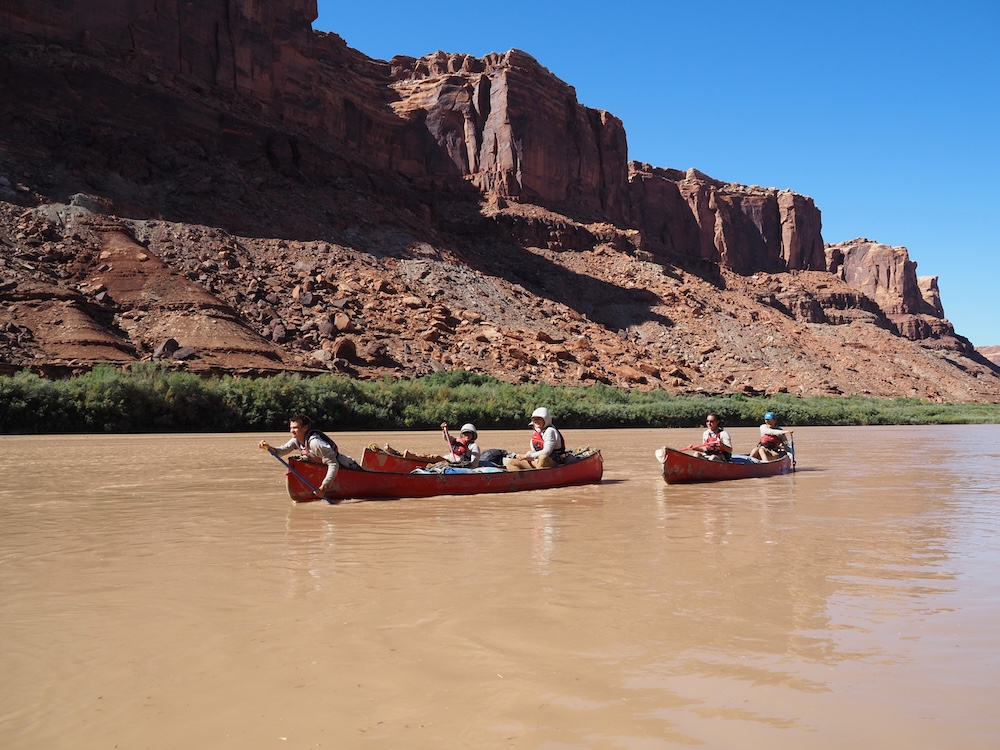 The next day leads us into the maze of Labyrinth Canyon, where walls of red, orange, and burnished black soar hundreds of feet above the river. The landscape is now truly unearthly, and we are relishing our existence within this magical world. We camp in a place we decide to call Canyon of the Echo, for the way its sheer walls call back to anyone who speaks loud enough.
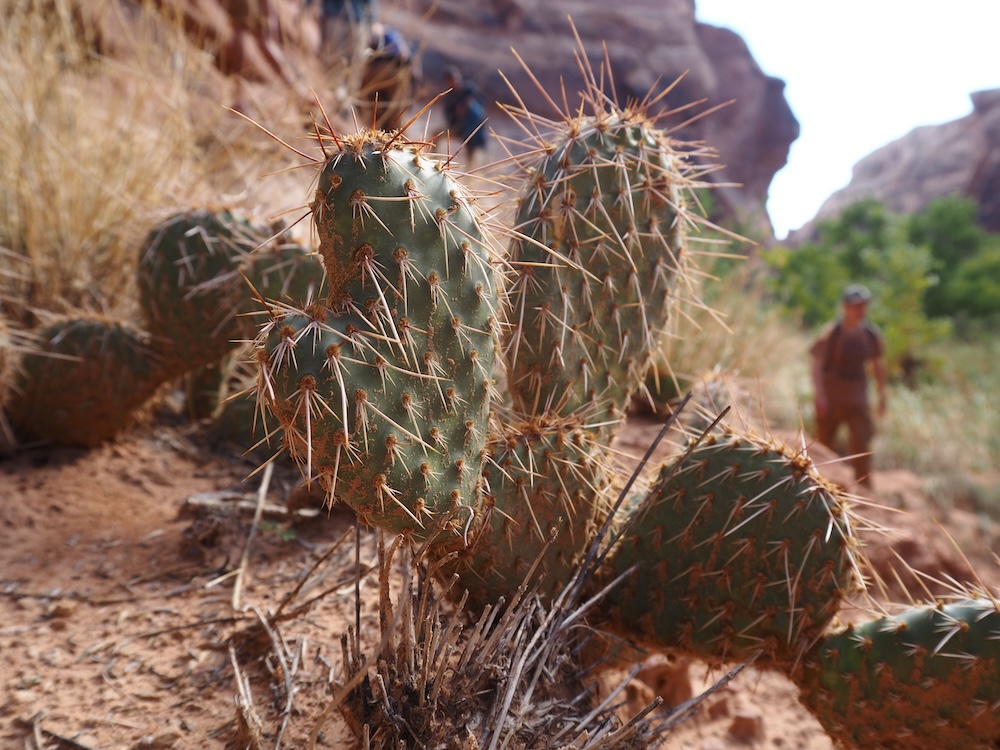
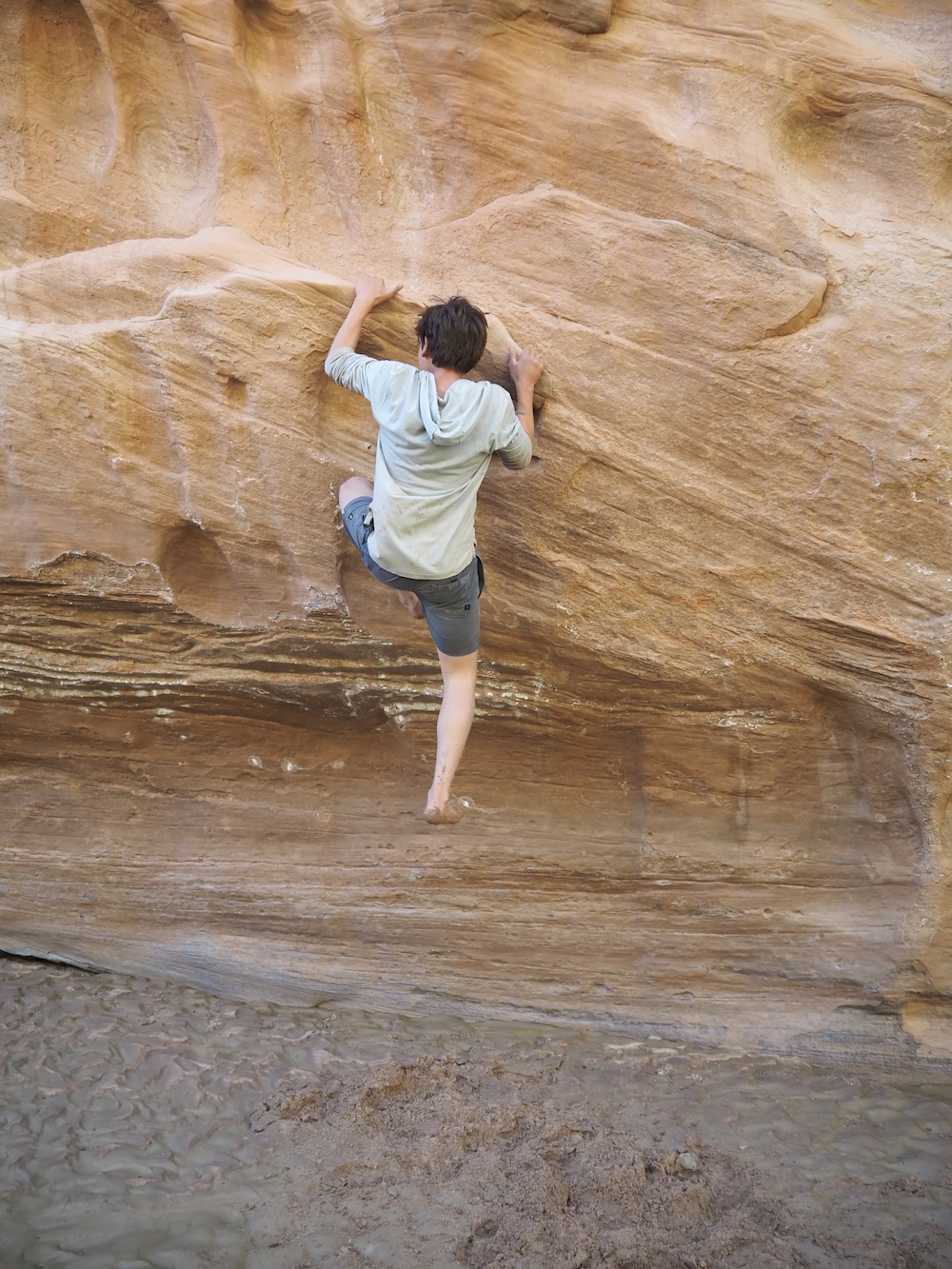
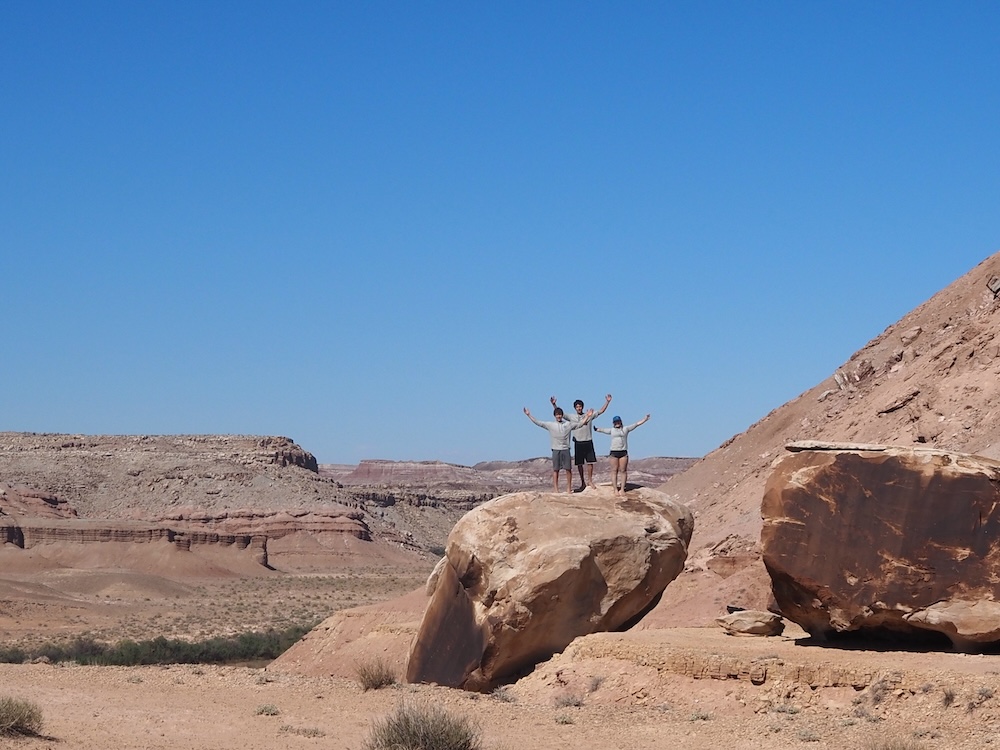
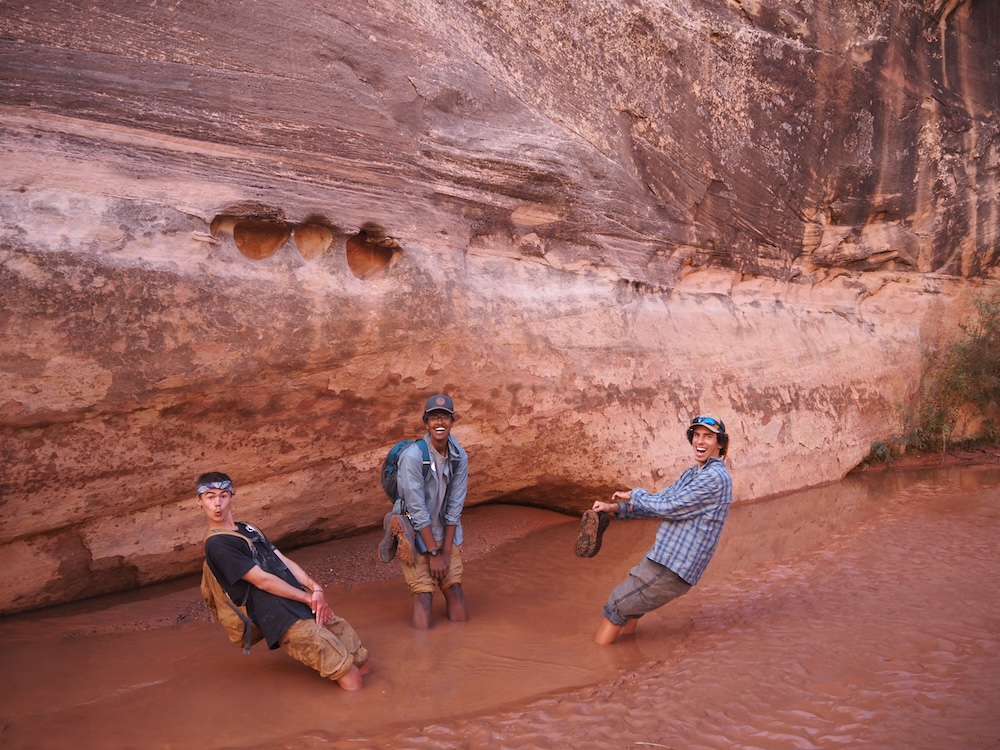 A little oasis exists here, with flowing water at the bottom of the wash and green cottonwood trees that tower above too many wild flowers to count. We spend a day exploring deep into the canyon, finding colorful rocks, desert plants, and quicksand. A sense of timelessness has settled in. A thousand years ago our eyes would have been greeted with the same serene, untouched view.
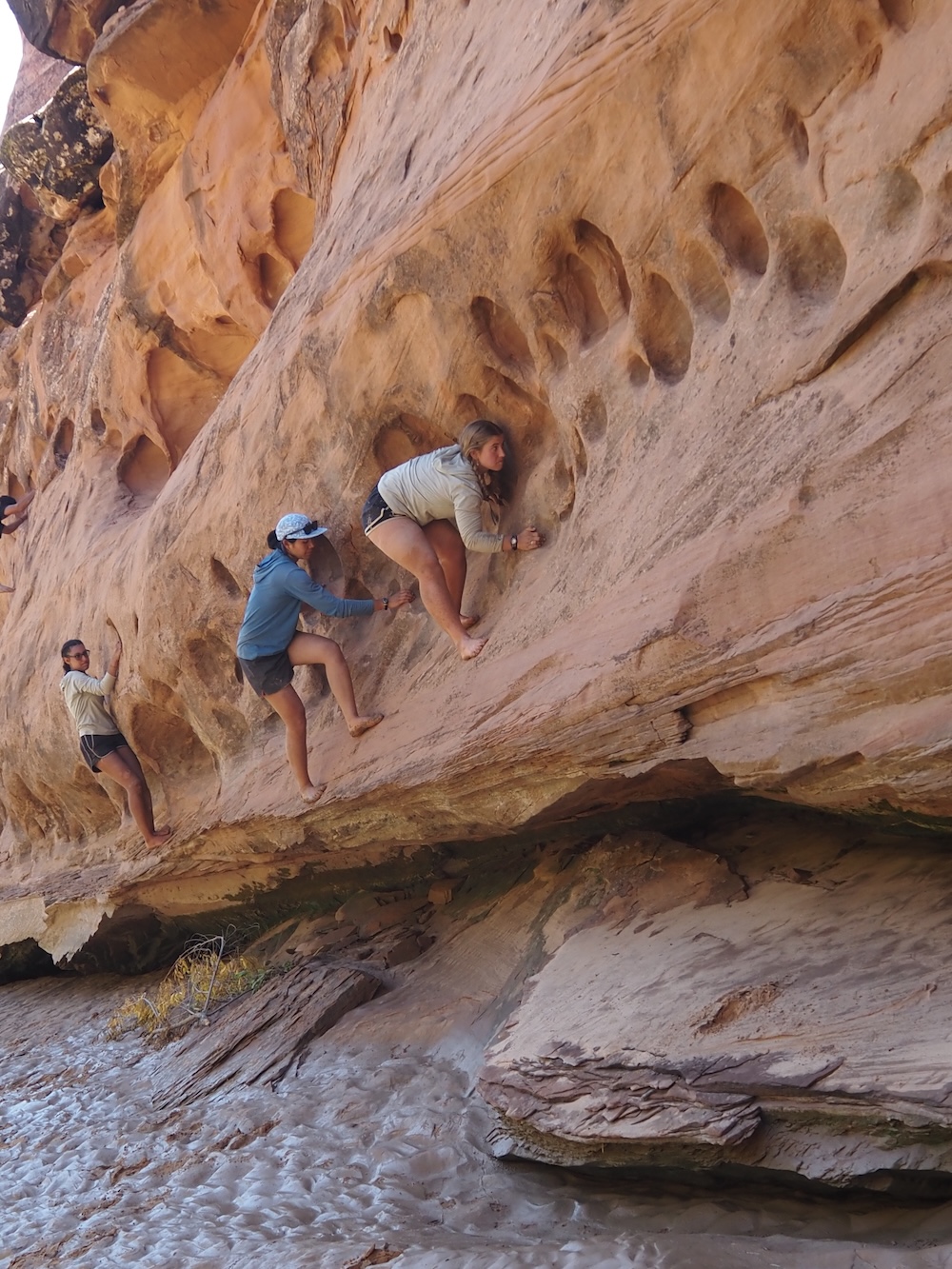 In Hejo canyon, we are faced with what seems to us to be unprecedented levels of mud, through which the canoes must be dragged for both our entrance and exit. Perseverance is a lesson we welcome, with the muck as our eager instructor. Eventually our muddy trial led us all the way to Horseshoe Canyon, where we layover for our last four days of this first Western expedition. As its name would suggest, the canyon soon splits into two, with a horseshoe-like divide down the middle. Our camp sits slightly left of center and high, leaving us safe from the flood water to come.
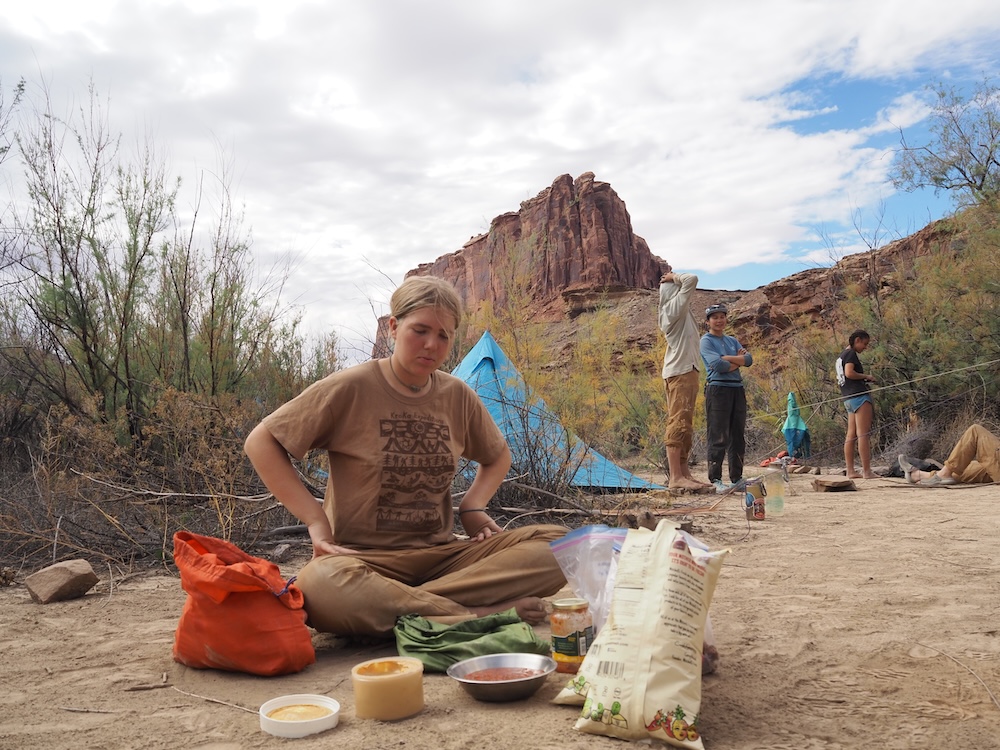
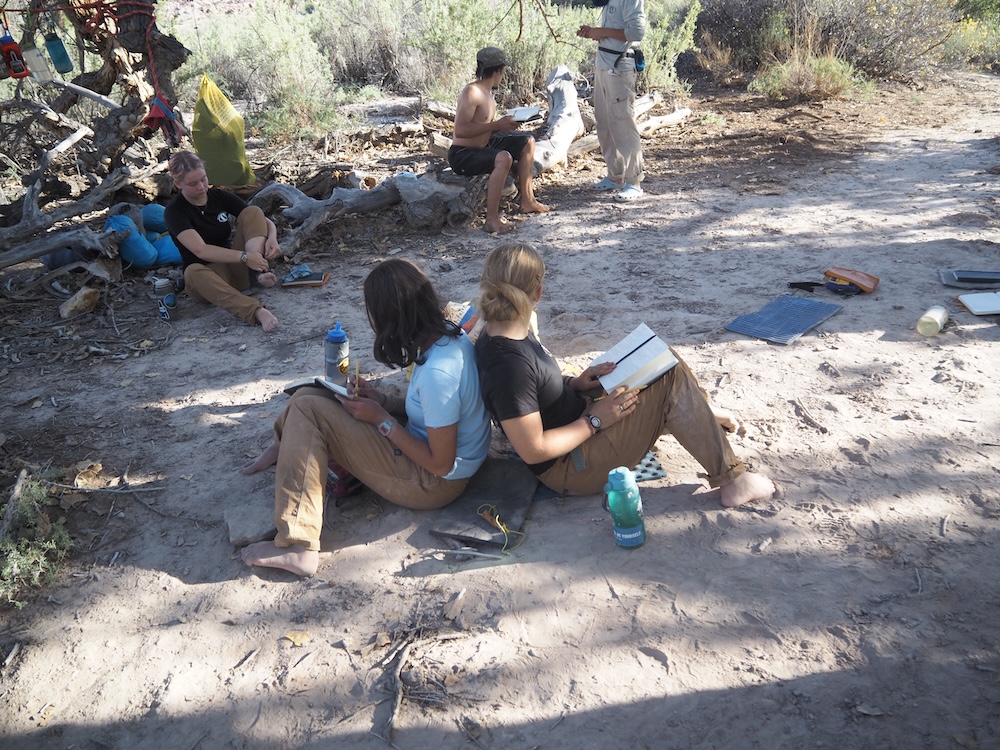
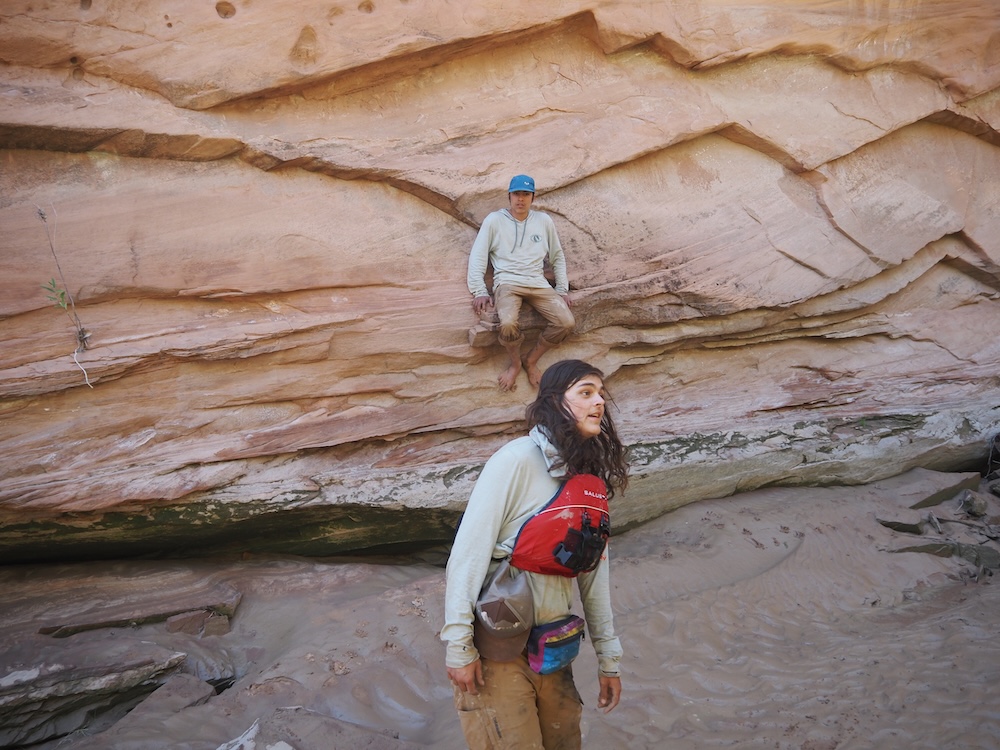 The climax of this chapter is Solos, where each student spent 48 hours alone in the desert. We have prepared ourselves thoroughly for this, though many are still filled with nervous energy as we split into two groups: six for each side of the canyon. Most of us have just eaten our final meal, and now we go forth, single file, with nothing but a journal, sleeping bag, sleeping pad, ground sheet, and 10 liter water bag for the next two days. It’s been drizzling on and off, and despite reassurances that, “It doesn’t rain much in the desert,” we are in for one heck of a storm. Ideally, we have been placed far enough apart so that our vision of our companions is obscured, and a feeling of true isolation descends.
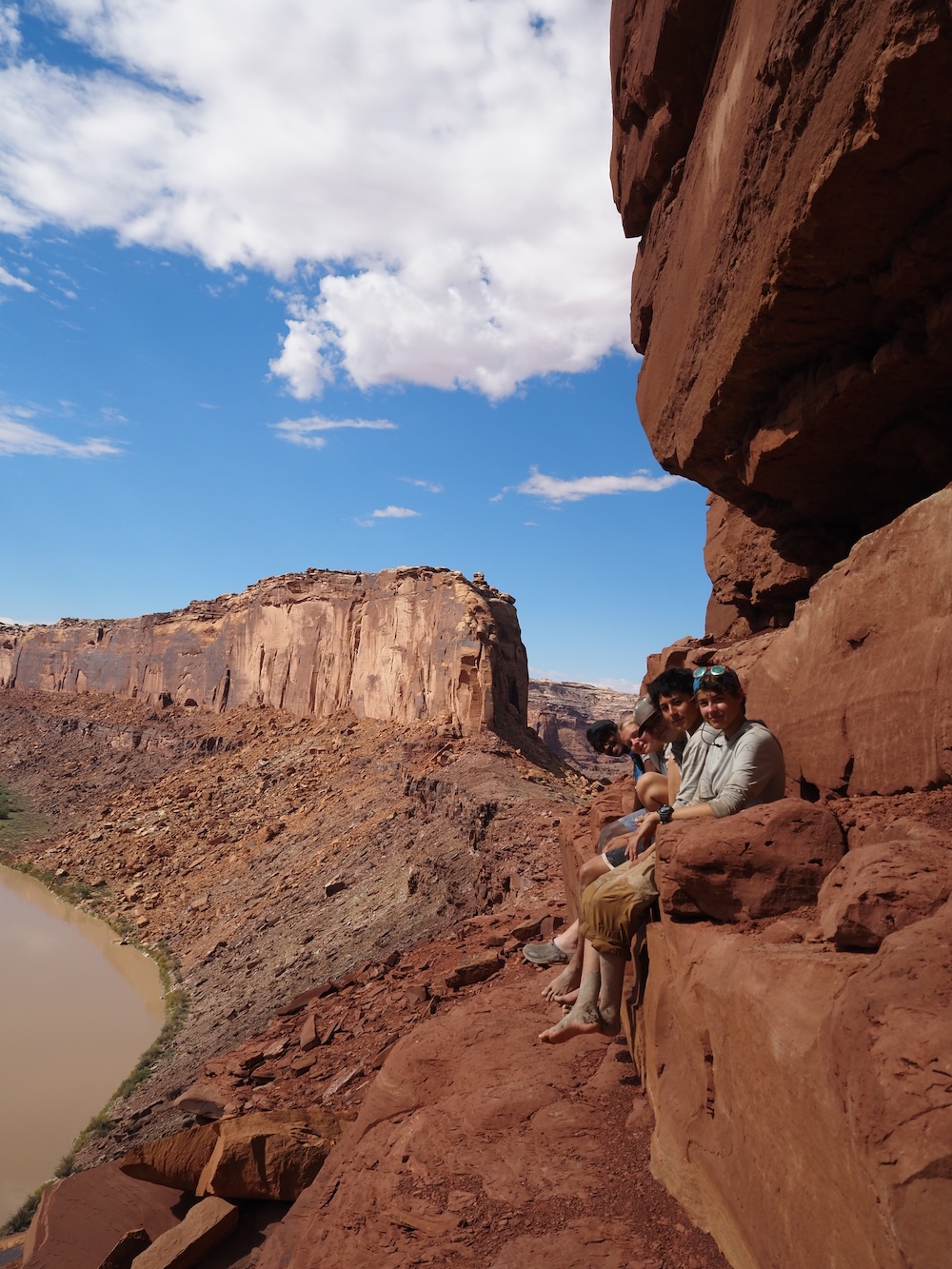
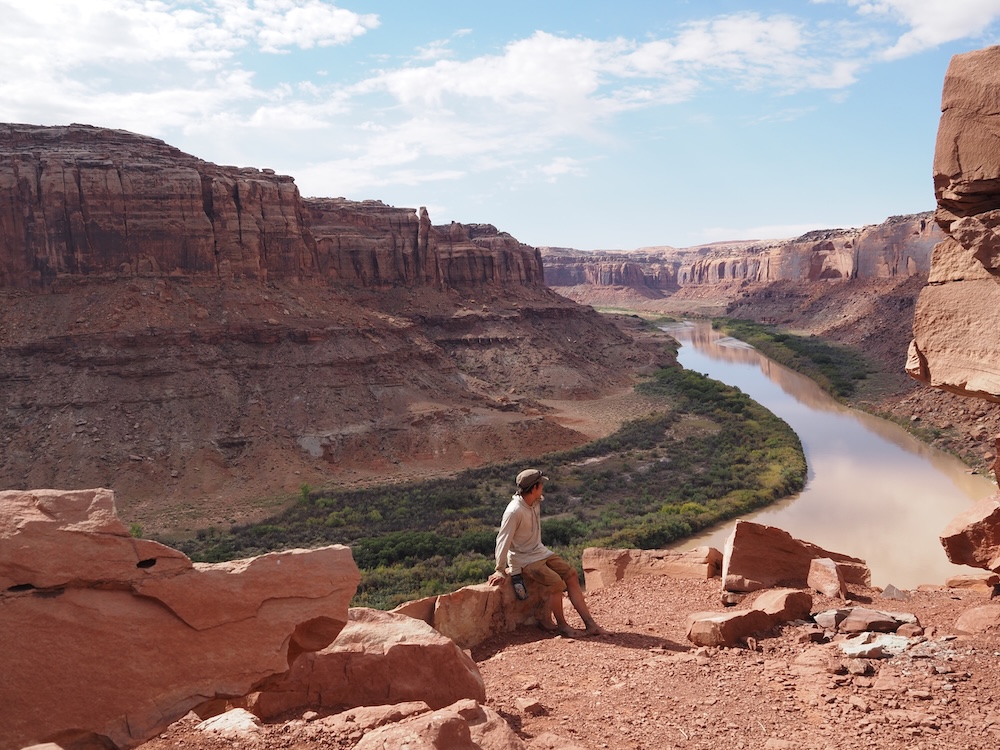 Our 48 hours are filled with chilly temperatures, and howling wind gusts. A normally tranquil experience becomes one that at times feels closer to survival. It is glorious. By the end of the last day, we’re all thoroughly covered in sand and grit that can’t be washed with merely a rinse. Wind and rain have changed us, as we return to camp for our final night, creating stronger, more resilient people than those who first wandered into the desert.
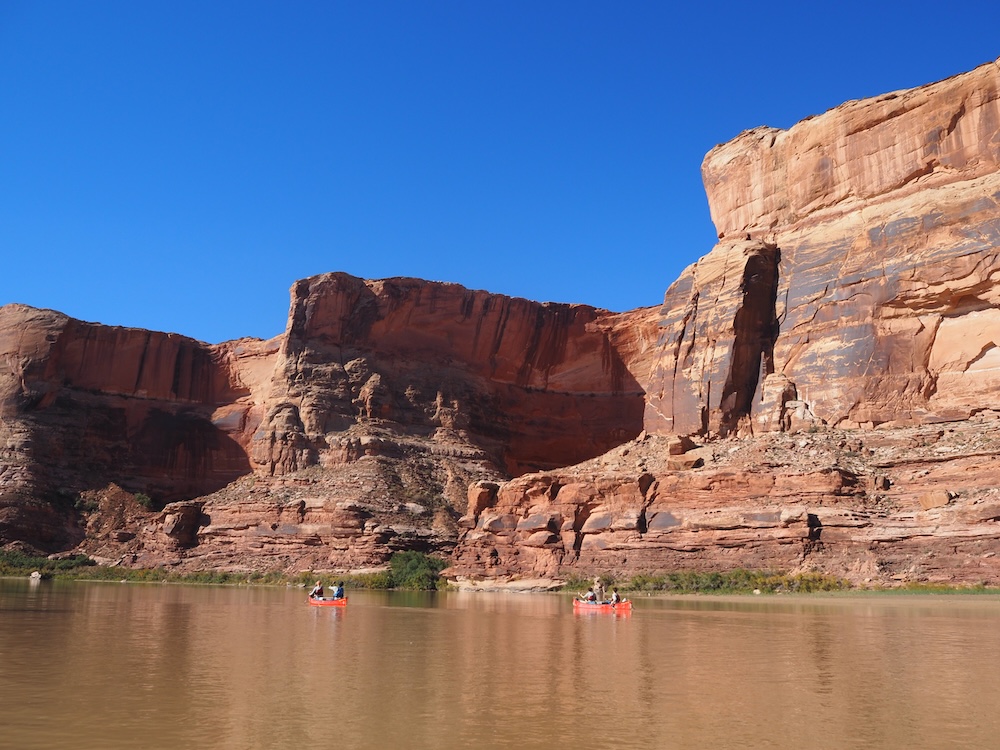
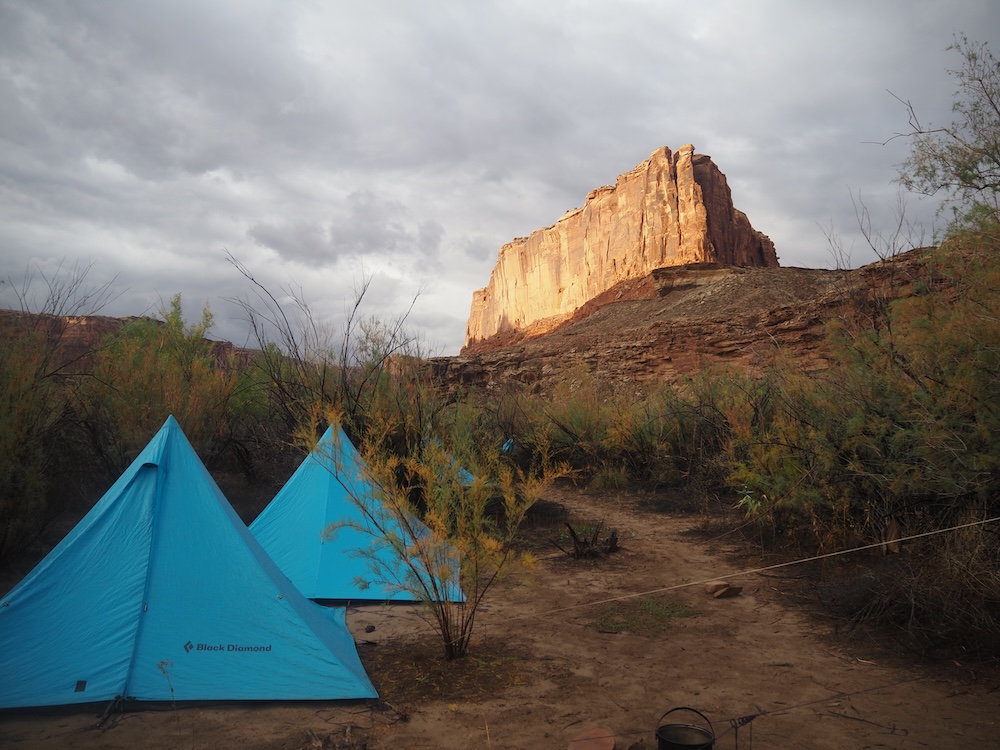
 We are all better for it. Water continues streaming down from the thick bank of clouds overhead, filling our tents with mud, and bringing a flash flood to the wash below us. Thunder crashes overhead as we huddle under the tarp, where most of us will spend the night. The storm doesn’t run its course until the early hours of the morning, when we pack our sopping gear into muddy boats and paddle the last leg of Labyrinth Canyon.
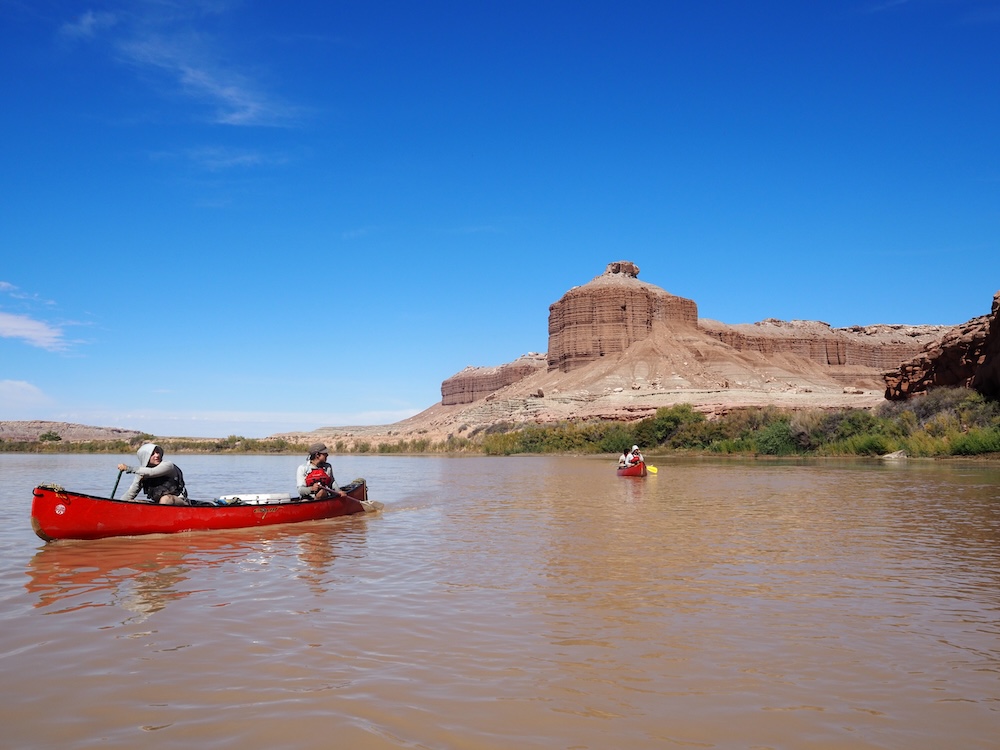
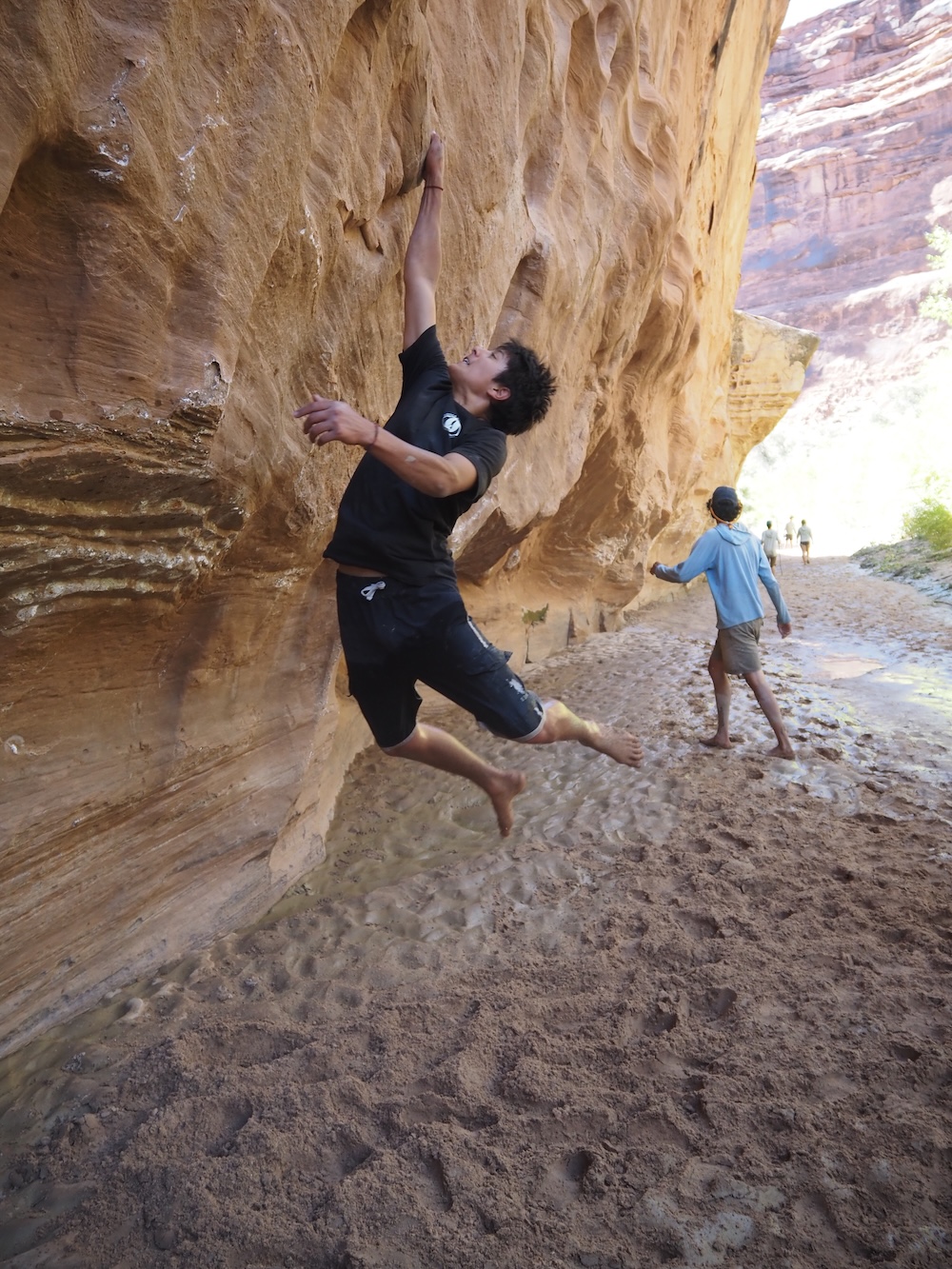 When we reach our takeout at Mineral Bottom, we are greeted with the news: the unpaved switchbacks are far too muddy for the van to safely descend, so we must cache our boats and gear and hike out. We leave nearly everything behind, taking only food, water, and our sleeping gear. We tighten our day packs, tie our muddy shoelaces, and begin climbing the muddy road up and out of the canyon. Luckily for us, it’s only about three miles to the top, and the canyon walls are surreal to see from our ascent. Dave meets us at the crest of the wall, and everyone piles joyously and muddily into the van, having lived the adventure of a lifetime.
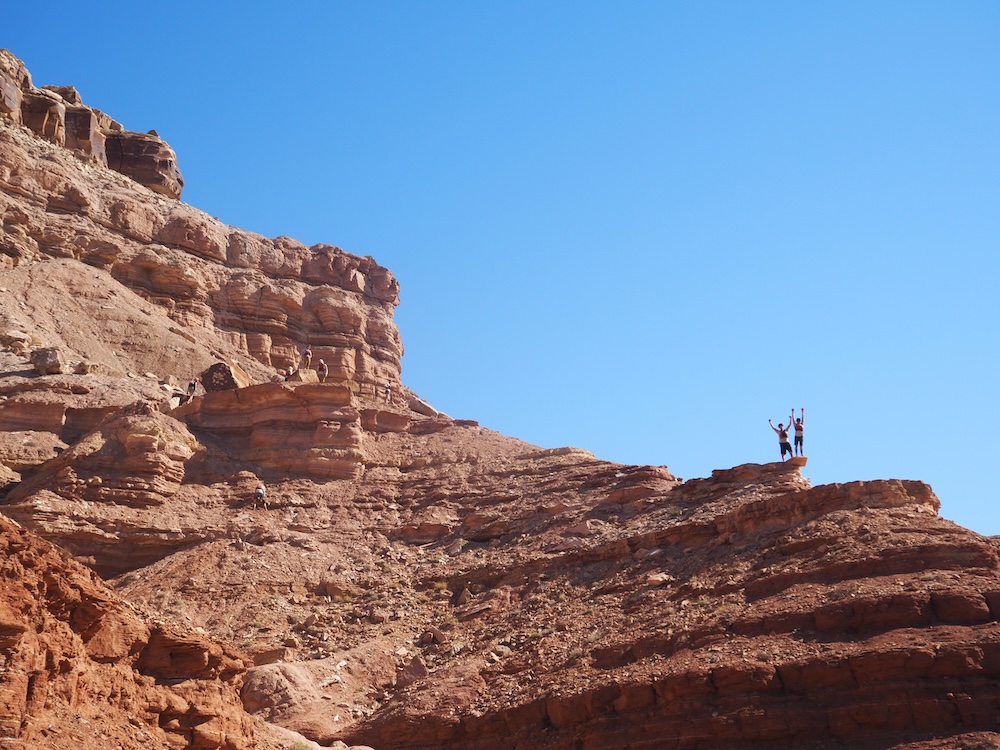
 It always amazes me, the happiness that the unexpected can generate. Every impenetrable bank of clouds brings double the laughter, and no one knows this better than our group of twelve. The next chapter of memories has yet to begin, and I am so very excited to live the continuation of our story.
Until next time,
Your dutiful scribe,
Zoe
A Love Letter to Labyrinth Canyon
by Noah
Miles of quiet, gentle, glowing
current. Carry daring adventurers
to moments of vibrant peace.
Memories painted with red clay,
and dark mud, tinted with amber
sunrises and sunsets. Encompassing
silence bringing wild knowledge to
us all. Our energy echoed off the
canyons, heard by your sandy
water, the life of the desert.
My mind forever wanders in
the maze, entwined in cotton-
wood and endless riverbends.
 Joy
by Caleb
As life around me becomes so real
And much more consequential
I now find joy in the little things
A fish on my line
My dog’s silly attitude
The laughs shared between two people
Many, many more could be said but still it’s hard to find
The joy in this big world as I get left behind