2026 Full Circle Semester Blog # 6
The Ahoorah
It ebbs and it flows
It changes in ways, only rivers can know
But when I was young, I studied her ways
And kept them with me, though all of my days
Now when I look down, from the mountains above
I know I am bound for the river I love
And in a million years, I’ll be a rock on that hill
And in a million more, I don’t know that I will
 Hello again! It’s us, your loquacious, verbacious scribes here once more to enthrall you in our meandering prose, much like the rivers themselves. When we last left off, we were well adjusted to our “sedentary” life of homesteading and academics. Now, we write to you from a serene scene of market gardens intertwined with permaculture principles and living spaces, all built by our gracious host Ian at Stonecipher Farm.
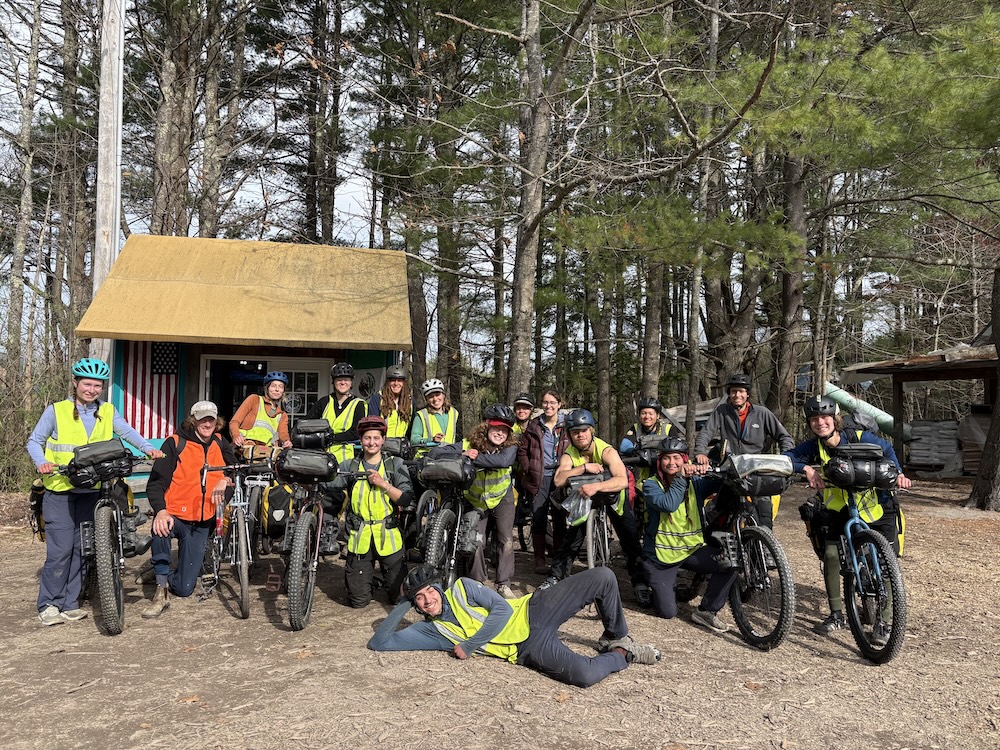
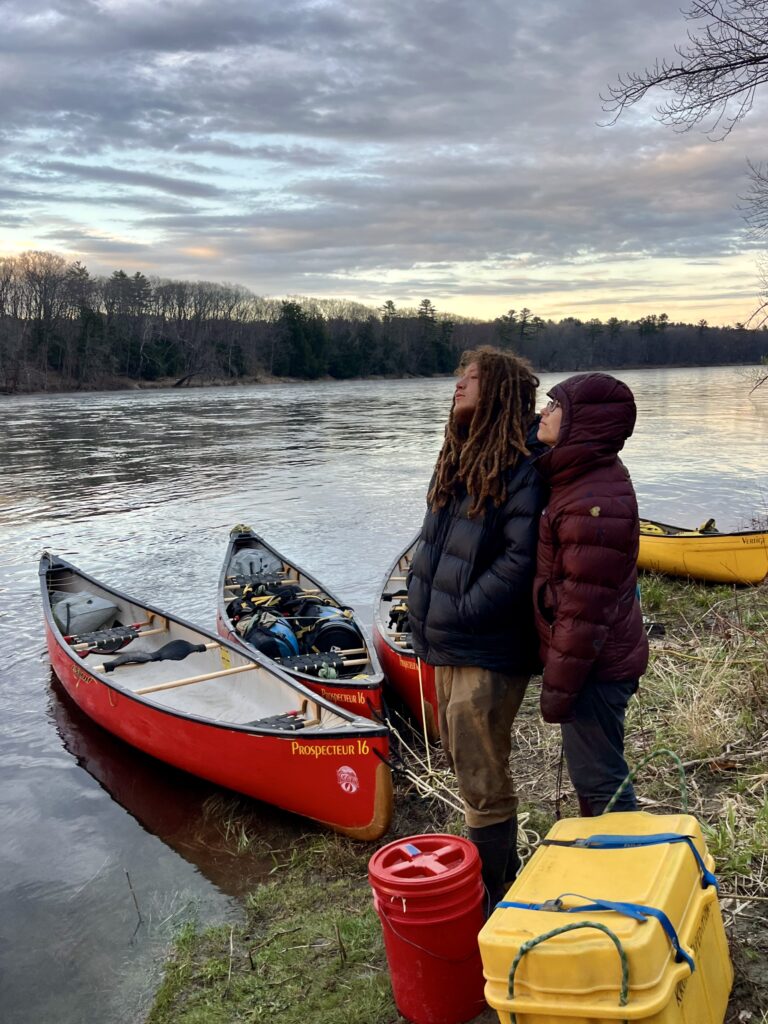
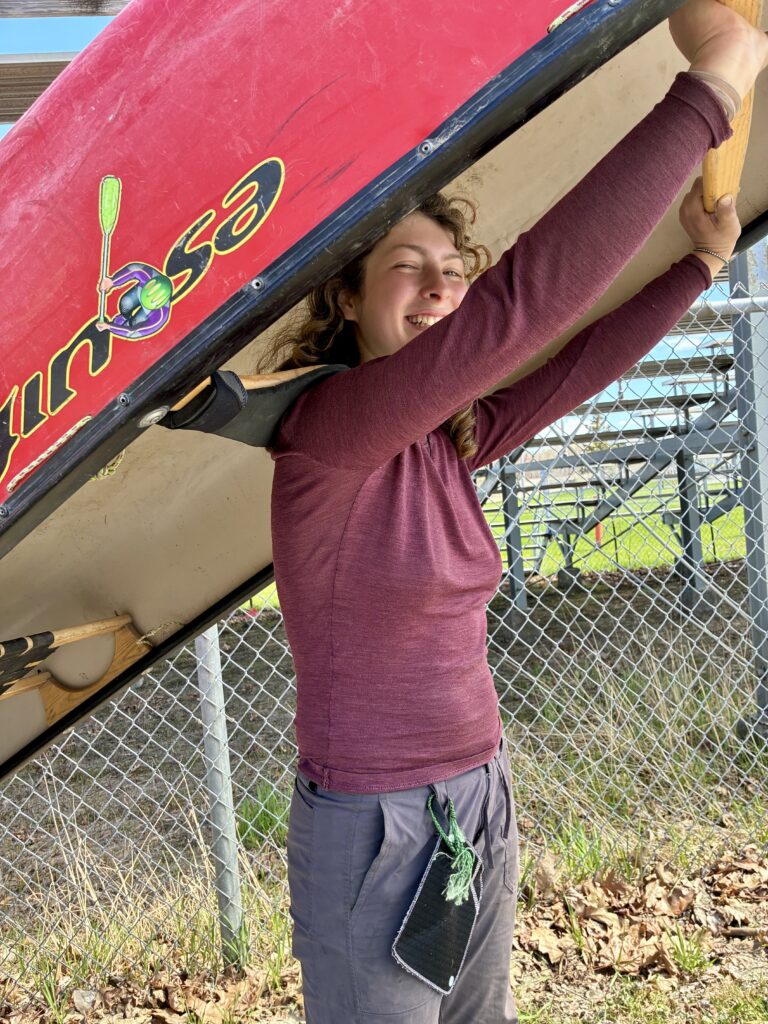
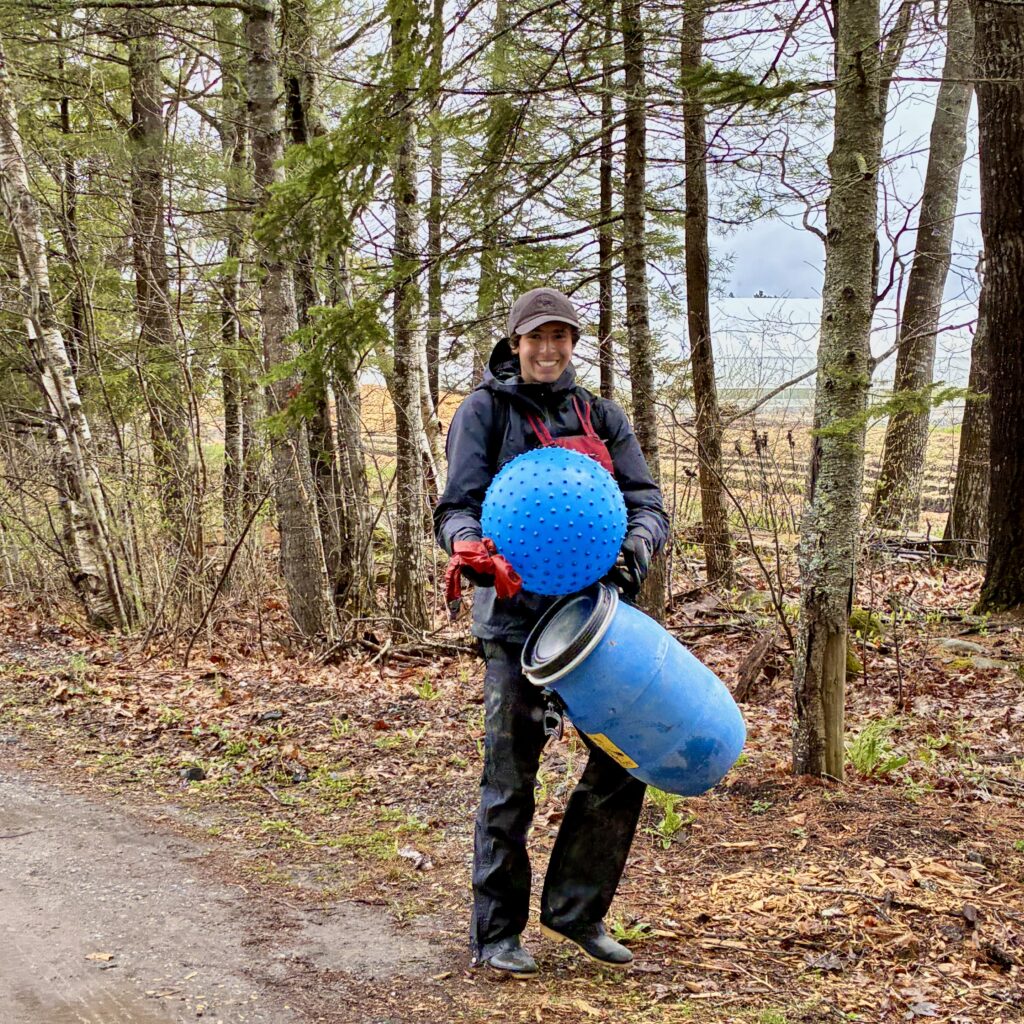
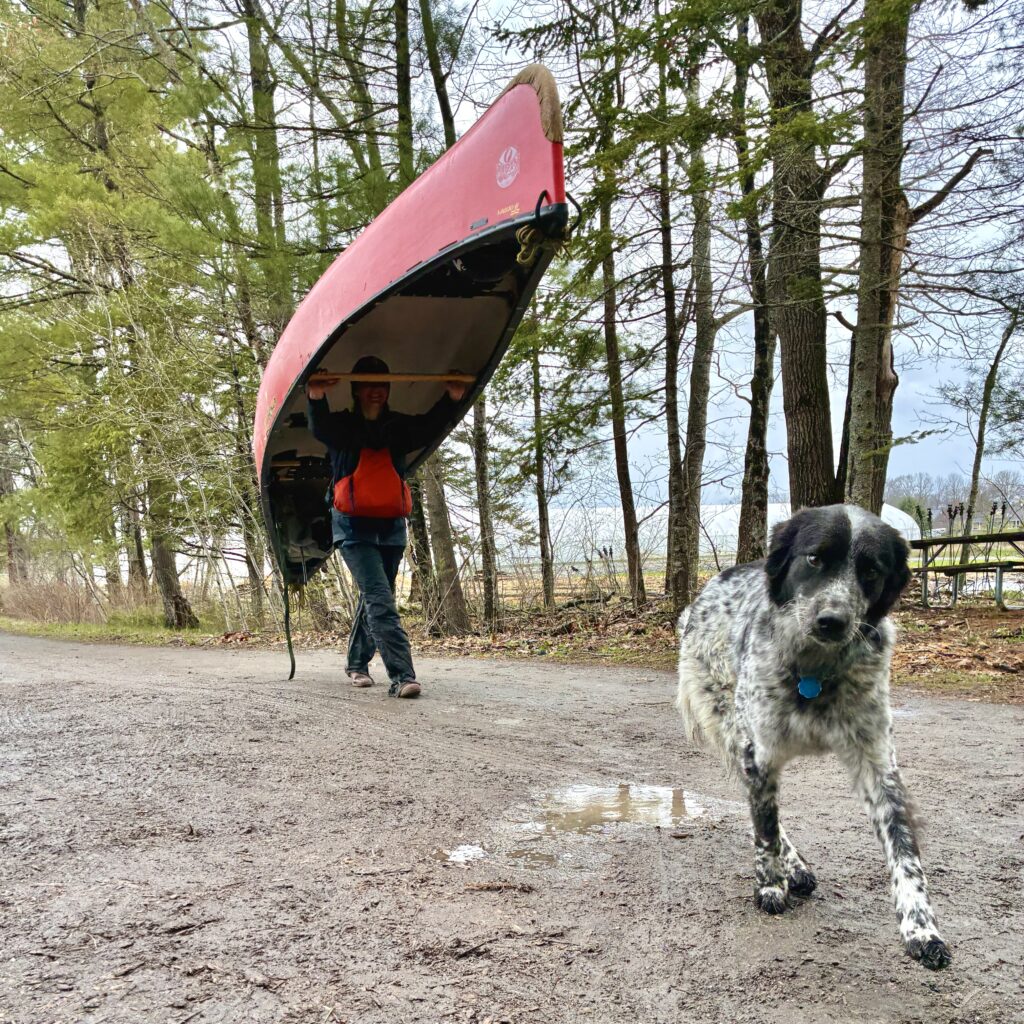
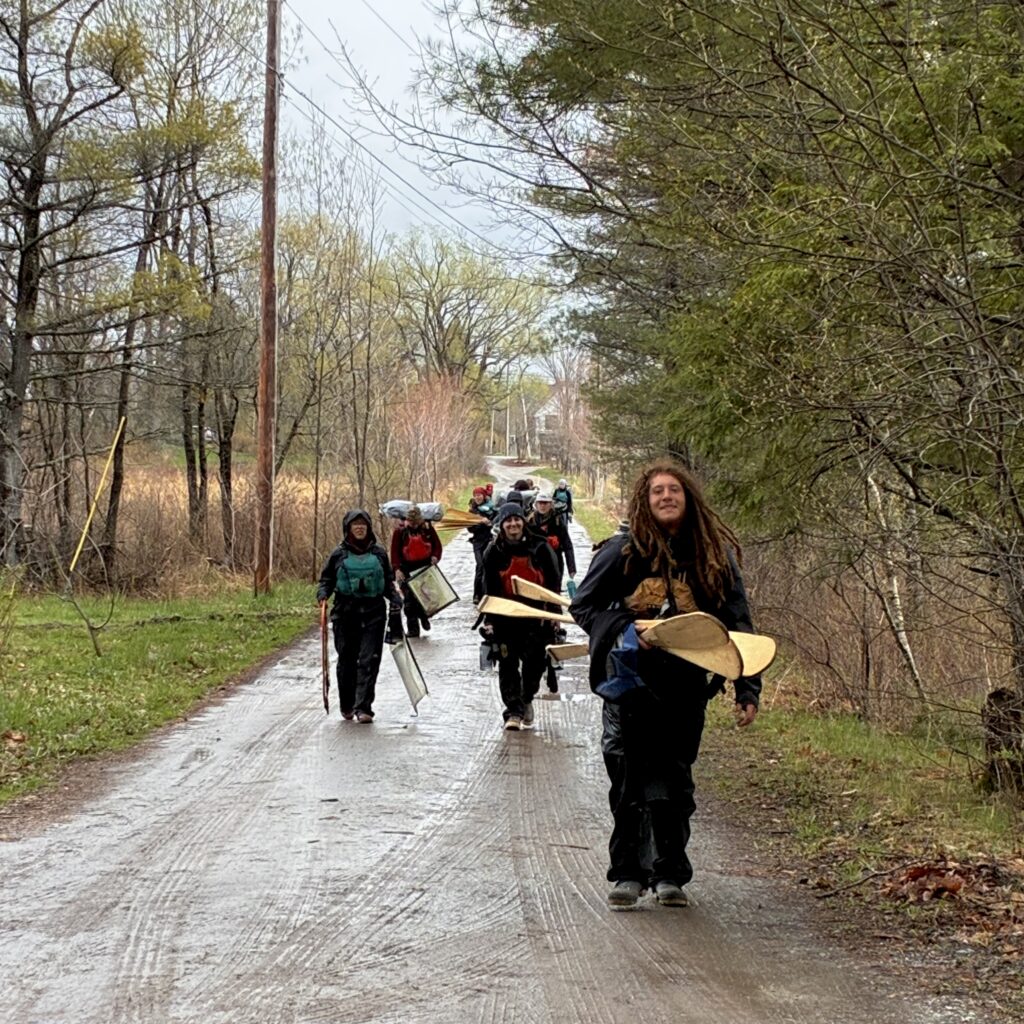
After spending time to finish reflective essays and personal paddles, we went on our last walk through of Maine Local Living School—the land we called home from the end of March through most of April—and reminisced on poignant memories, before putting canoes on our heads, paddles in hand, and walking off the start a new adventure. One that, much like winter trail, was a first time experience for most of us.
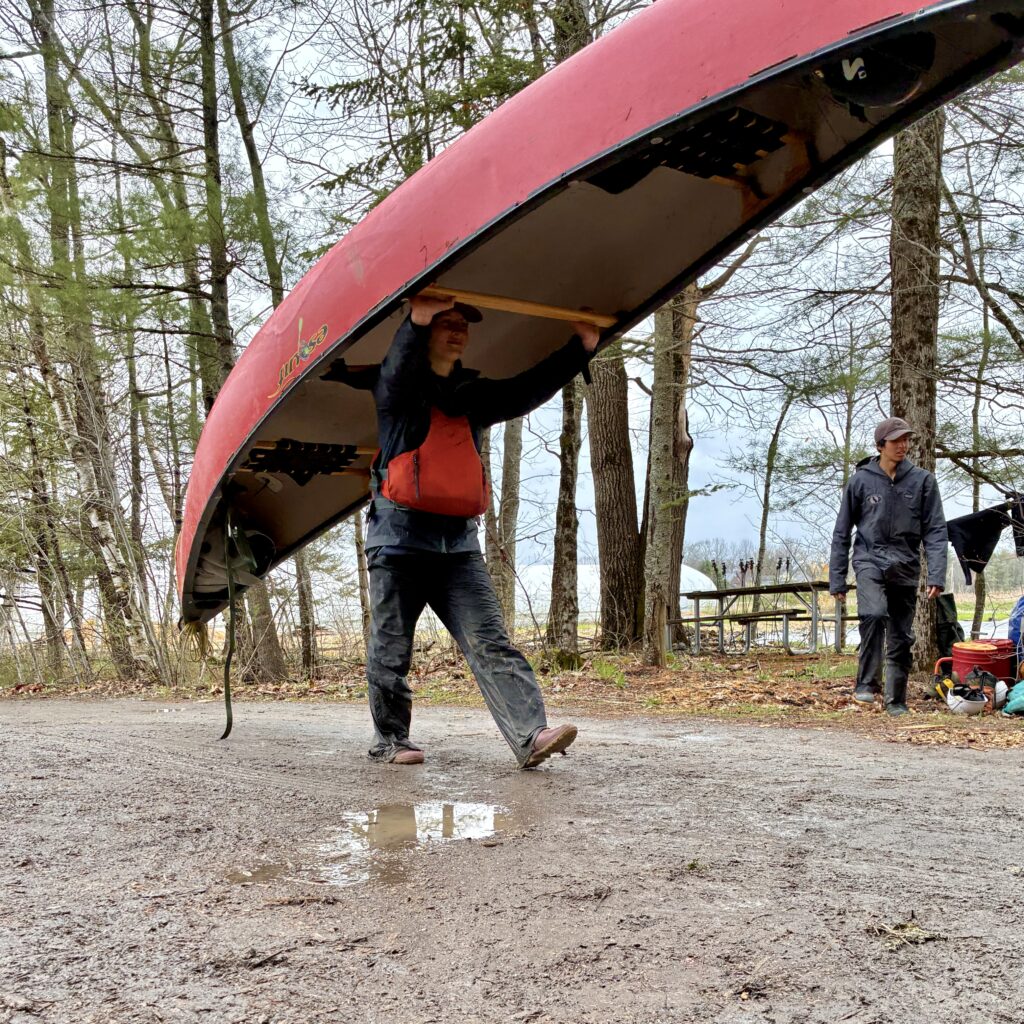 Getting back on the trail feels like visiting a good friend who has moved into a new house and I don’t know where all the dishes are in the kitchen drawers. We are learning the new systems of river travel and camp set up. This whole day I’ve been so excited to get moving again that I’m just jittery… There just feels like there’s so much to life right now. ~ Charlie
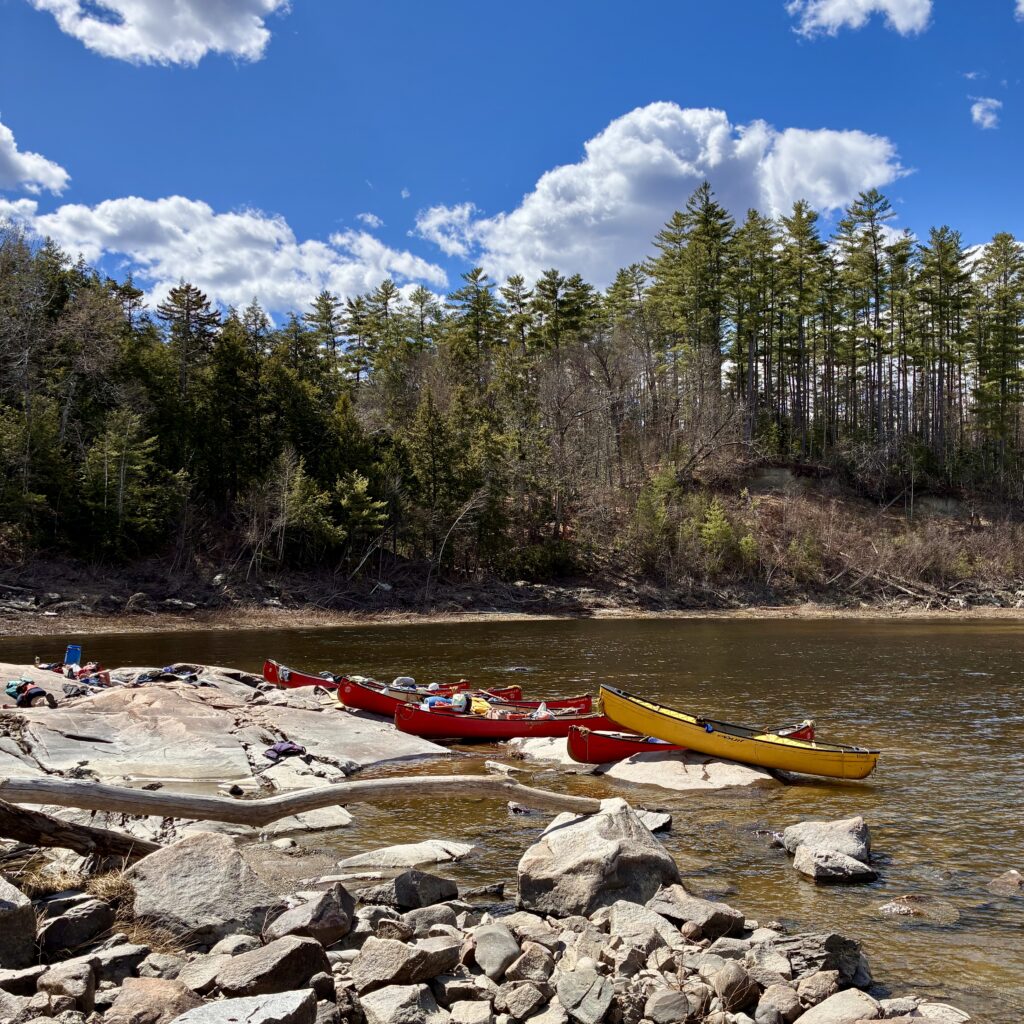 Temple Stream
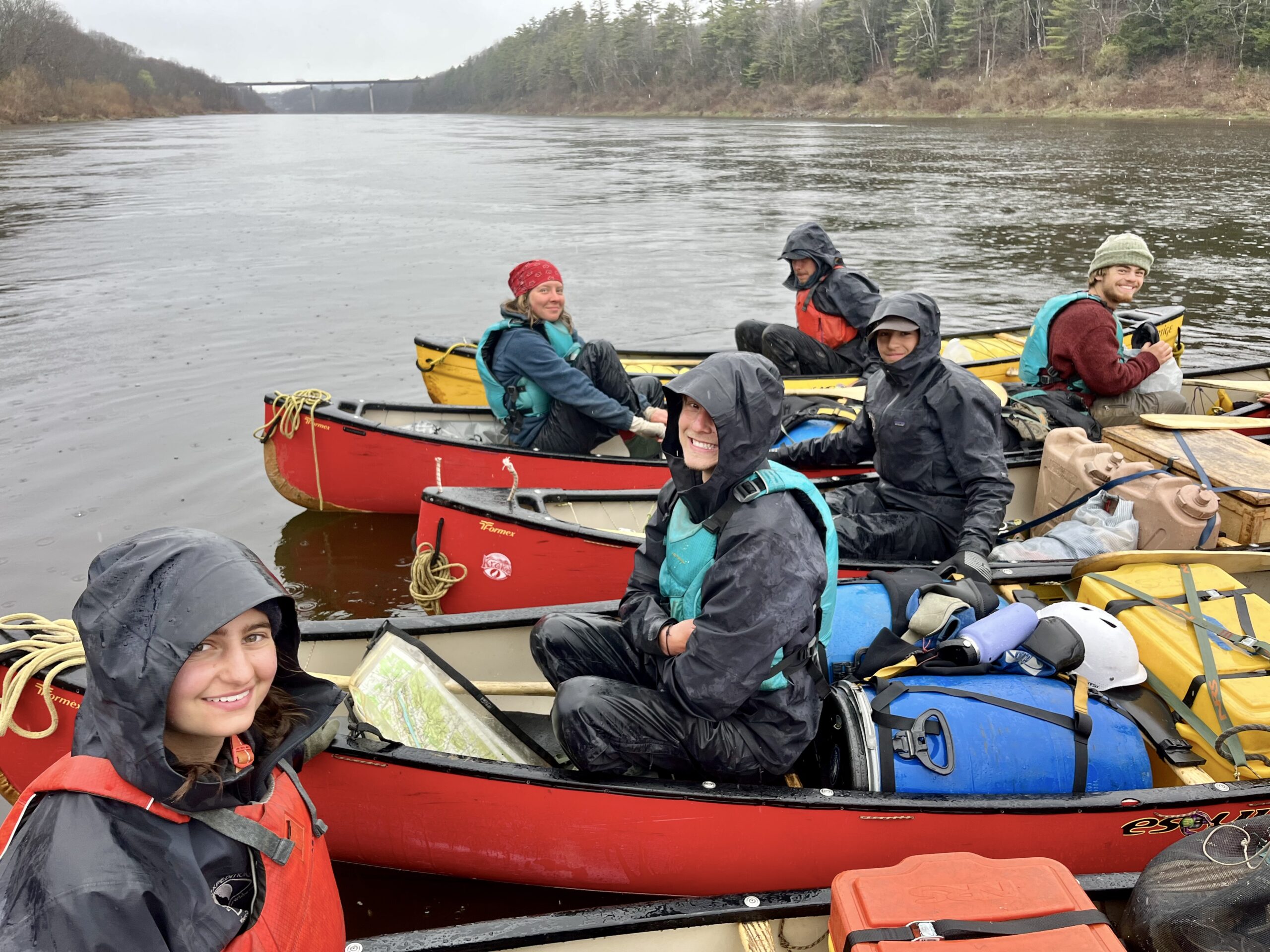
On our last day at MLLS we visited the spring, the start of the watershed of our journey to the ocean. Soon after that we put 17 foot canoes on our heads and walked down to Mud Pond. As we all slowly trickled into the water we realized that going straight in a canoe is not that simple. We would paddle frantically or slowly on our left or our right but the canoe would do everything except what we’d want it to. After spending a few minutes figuring it out we were given a quick lesson from our instructors, Alex and Jo. Paddling into Drury Pond gave us a quick taste of all the work the beaver’s around there have done. We had to walk around dams and paddle over them. Finally, once we were in Temple Stream, the water started to effortlessly take us down. Of course, this also meant getting out of our canoes to line them through the shallow rapids or dodging the windy curves just in time. We were only in Temple Stream for a few days, but we still got to enjoy different adventures like catching a fish with our hands, lining through BIG rapids in old dams and being welcomed by the kindness of strangers, like Jake who welcomed us into his home on our first night and who we re-encountered on the Sandy River. And, the most beautiful thing of all was to see the small stream we started on slowly become a big wide river.
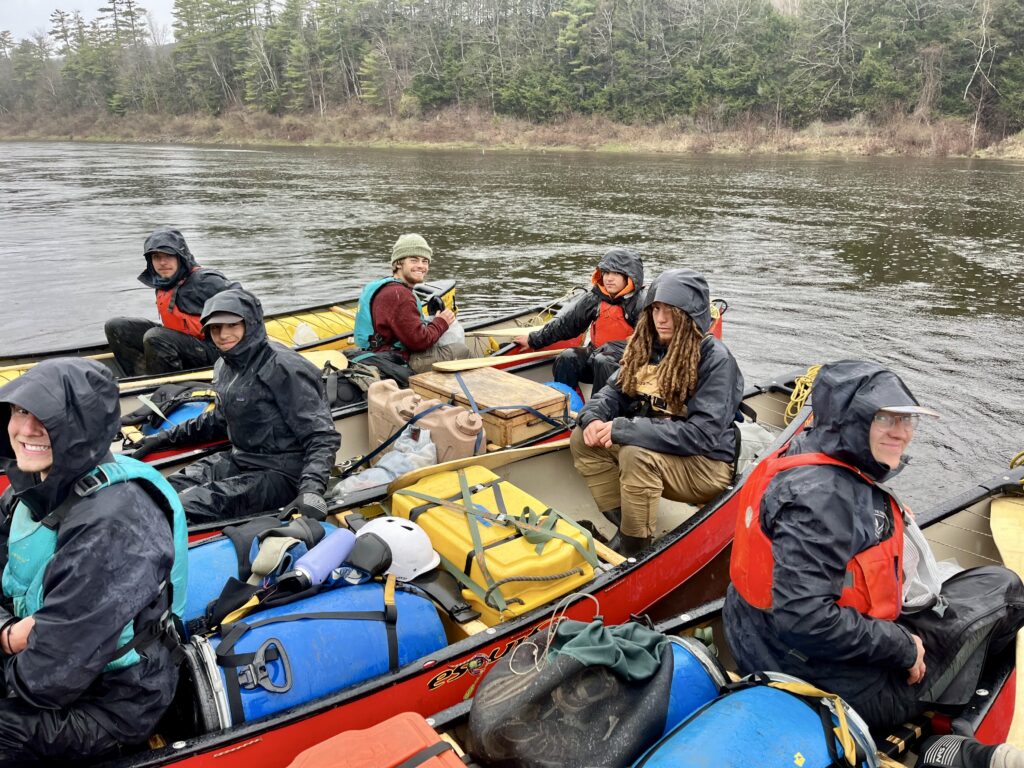 The Sandy River
After a long day of lining down swift rapids (which means taking the stern and bow lines of the boat and walking the boat like a really big angry dog that wants to run away from you, down to calmer waters) and muddy banks, we finally made it our first proper river, The Sandy, which is by no means a misnomer. Upon arrival to the confluence we were greeted by a strong current and a perfect opportunity to practice “eddying out”.
We passed by a solo canoe preparing to run the gorge, and lo and behold it was Jake, seemingly inspired by our intrepidness to get back out on the water. We followed suit, heading down to the first eddy where Jake was waiting. Already some signs of our amateur-ness were shining through. Let’s just say some canoes got turned around trying to find their through lines. Once we were regrouped and got out some nervous chuckles we continued, canoe by canoe, under the bridge to the next eddy.
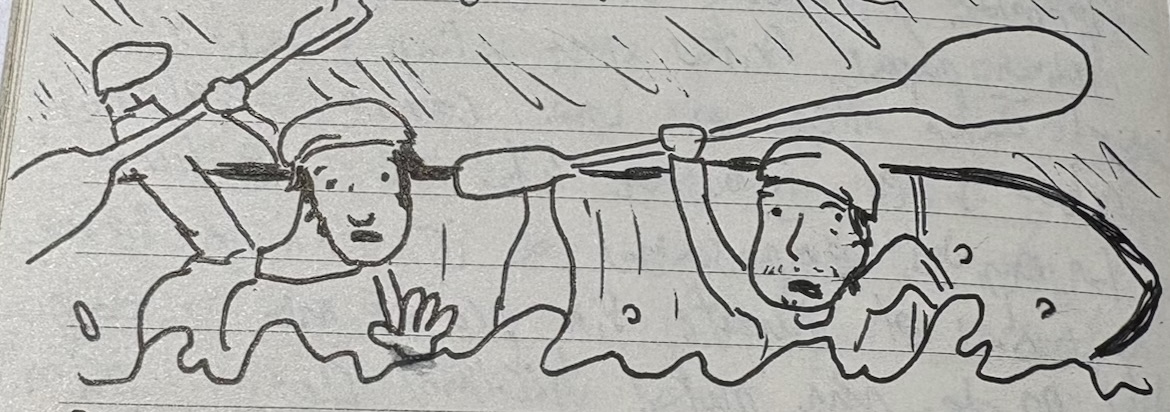
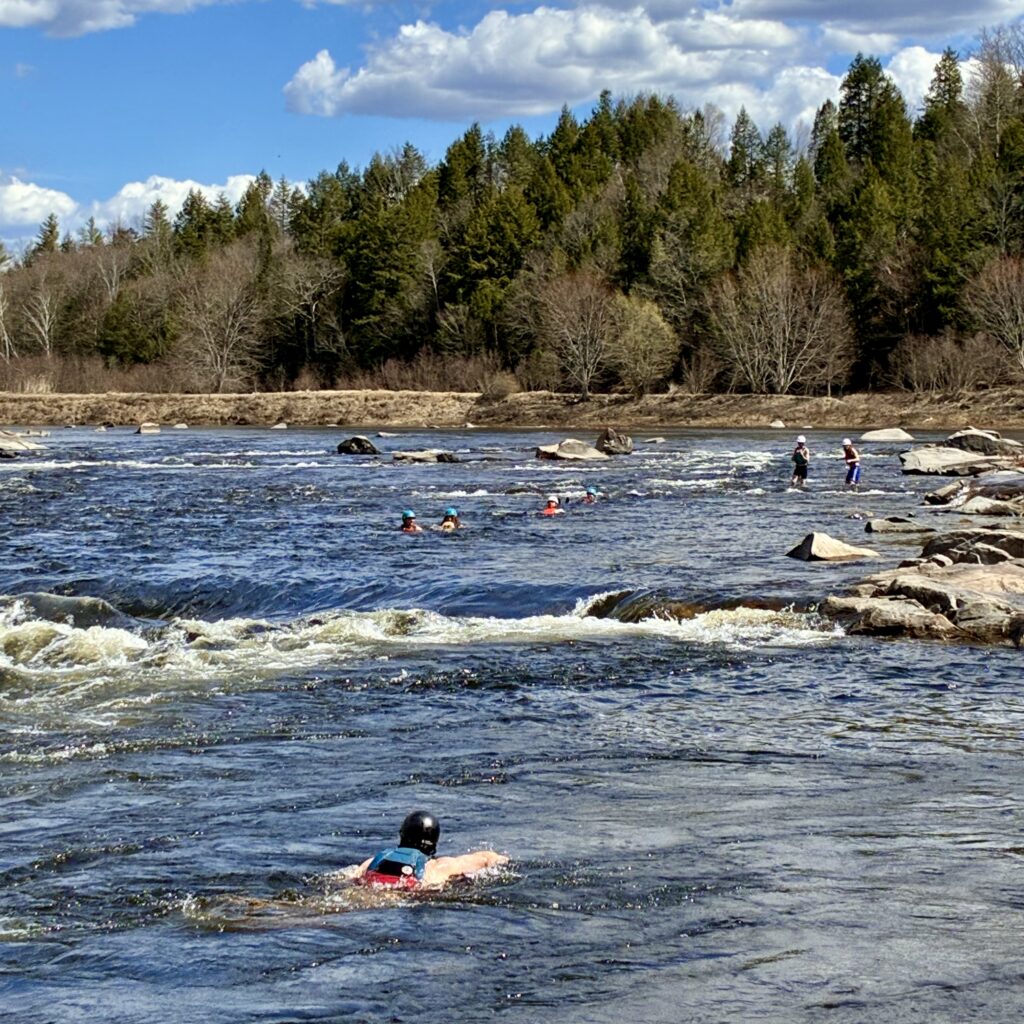
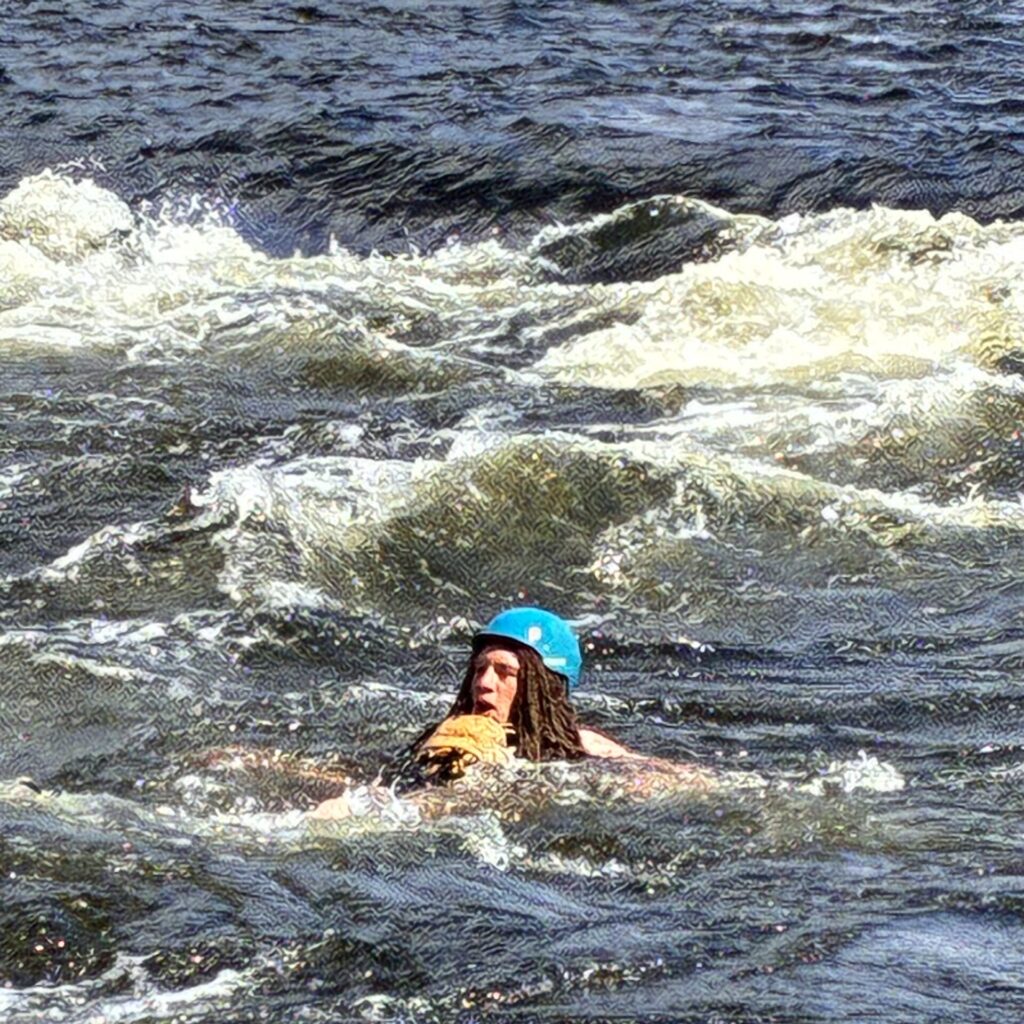
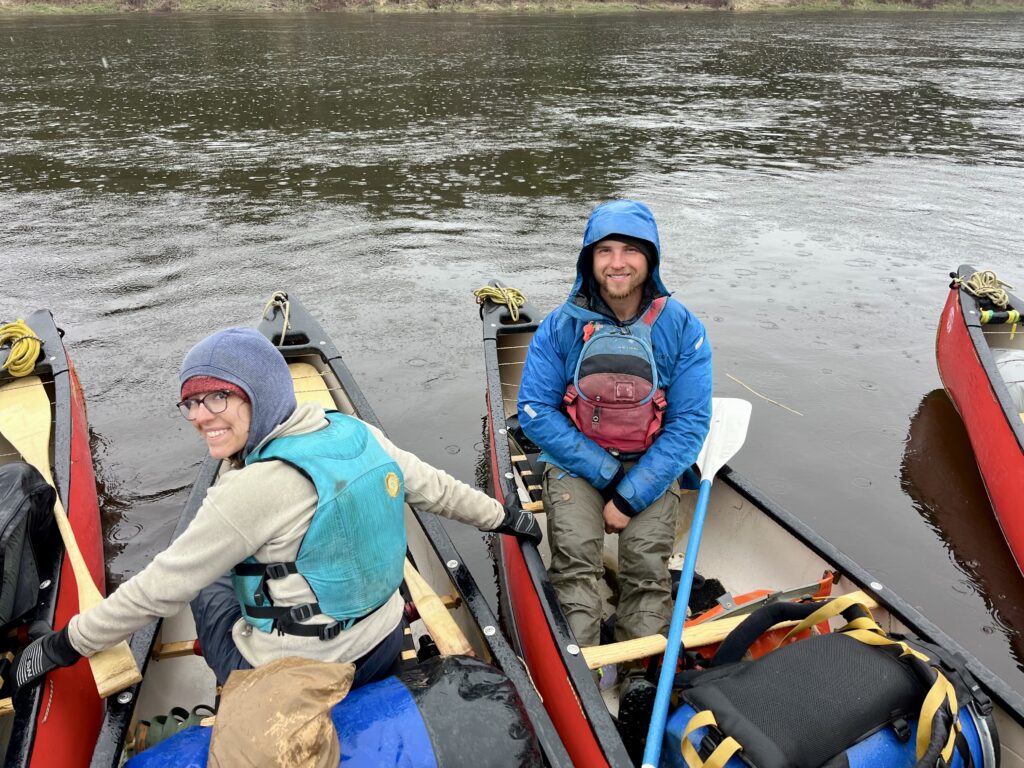 At first all went well, as we followed after each other making sure to give plenty of space between groups. Then suddenly, while waiting my turn, I saw an overturned boat in the river and 2 bobbing heads. Bernie and Joaquin had somehow managed to flip in the one flat bit between rapids. Fortunately, they got out all right with all their gear accounted for, save for the lone fishing pole we brought. Once we were all through we pulled on shore to warm and dry our shivering companions by a fire before furthering along the gorge.
The rest of the day was fortunately less eventful: we made our way down the rest of the white water, splashing through waves and bailing out boats until coming out to calmer water and finding camp on an appropriately sandy shore. That night we went to bed unaware of the evils in store for tomorrow.
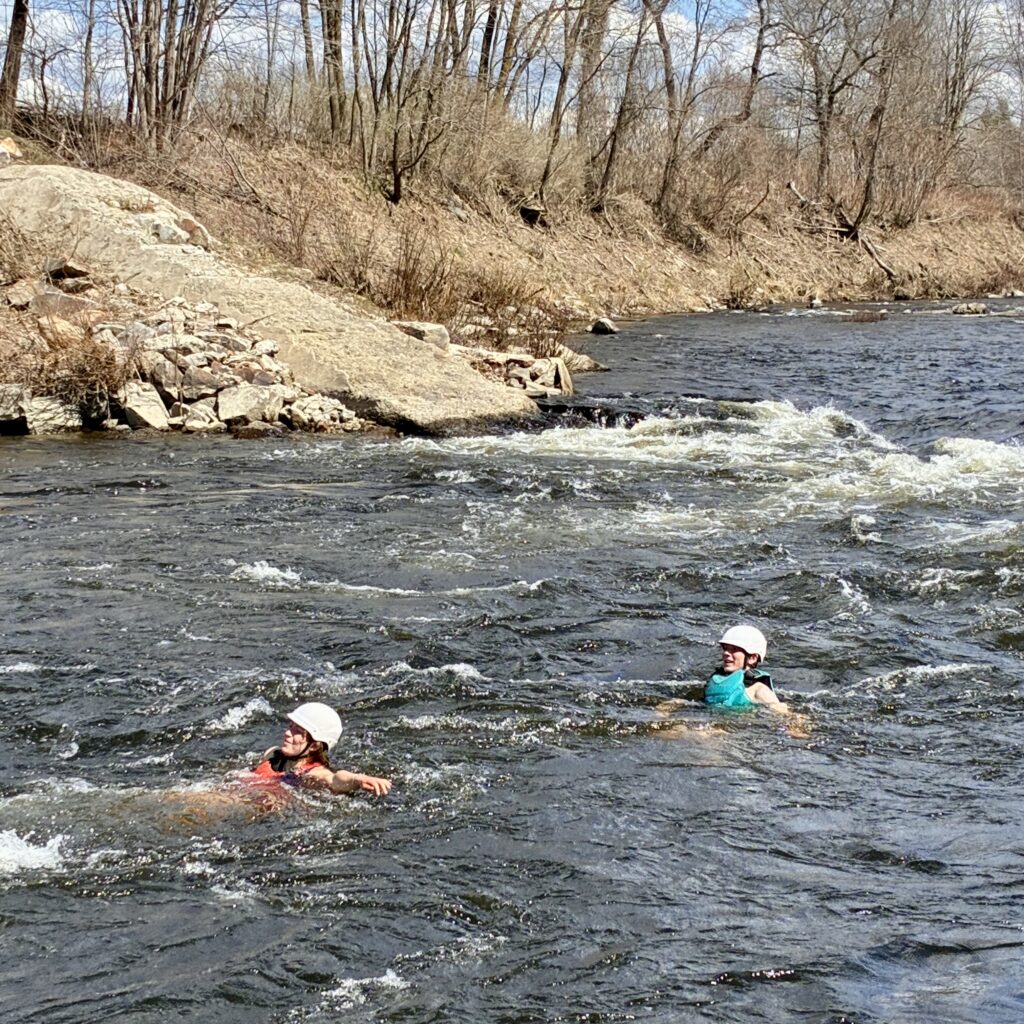
The next morning we awoke tired and sore from the day before and grateful to have a live-over. But already there was some disconcerting news: Ella had thrown up and wasn’t feeling well. By breakfast, 2 more had gone down the same route, and pretty soon it was clear: a sickness was working its way through camp. By the end of the day 6 of us were taken out, suffering through body aches, stabbing stomach pain and dehydration. That night was a cacophony of wretching coughs and zipping tents. By morning, more of us had fallen and any plans to travel that day were scrapped. One by one each of us went down for the count until only one instructor, Jo, remained as the lone survivor. The image of camp was one much akin to pioneers stricken with dysentery…bodies splayed on the river banks and slumped under trees. But, by the next day, enough of us were well enough to paddle, so we paired the still-ill with the well and ventured down one last class 2 rapid. Those who were well got to play and swim through some of the waves, while the other poor souls looked disconsolately from shore. Soon after, we made our way to the Kennebec and moved on from our troubles.
I sit in the sun one day early in May, looking up to see a house finch and a fledgling in the tree above me. The house finches wasted no time this spring in building a nest and doing the work of the season. Similarly, I want to spend less of my life thinking about the past and mourning change. I believe that all parts of life are beautiful in their way, and I want to honor this by fully living into everything I experience. The reality of life is that it is full of impermanence, which is not easy for me to accept, but I know that doing so will allow me to live a more fulfilling and balanced life. ~ Kate
The Kennebec
Finally, after many adventures, and without having fully recovered from them all, we reached the confluence with the Kennebec River. We quickly put all of our canoes side by side as we slowly let ourselves drift downstream. Jo started reading Kennebec: Cradle of Americans to us as we got comfortable in our canoes. Slowly the words on paper became reality as the landscapes changed.
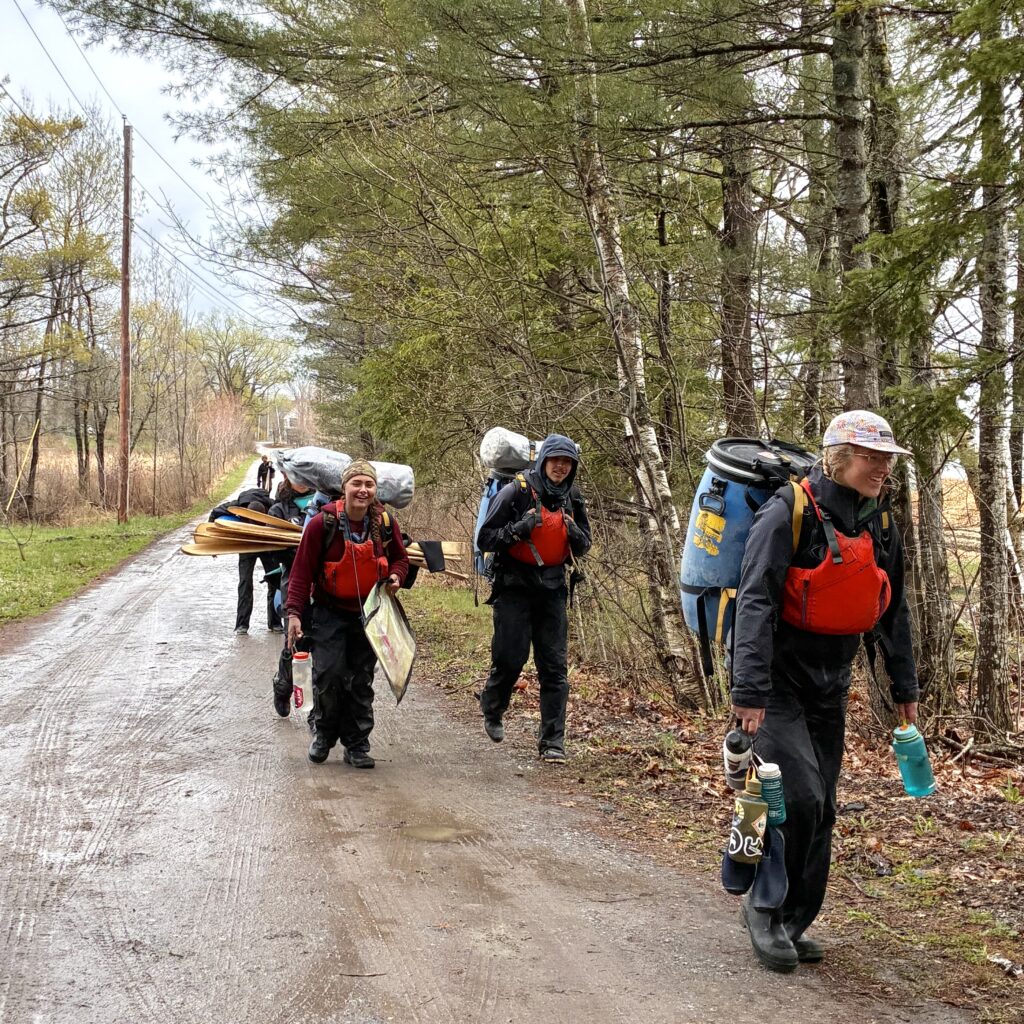
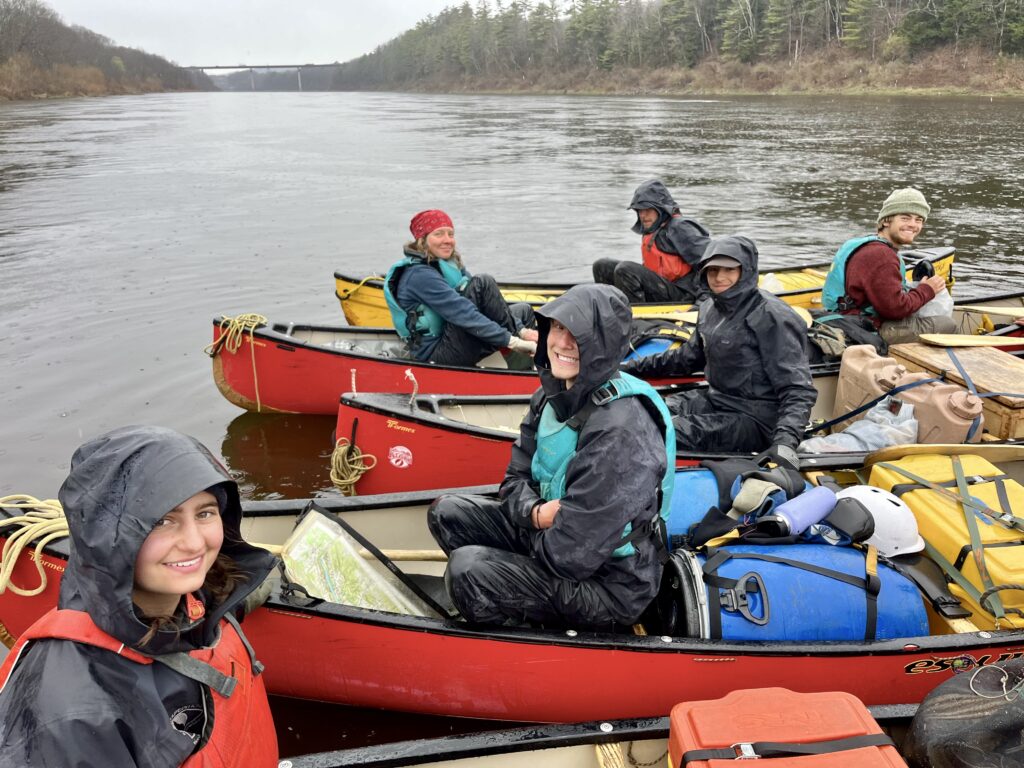 Our first night on the Kennebec we were graciously welcomed by Al and Patty to camp on their shore. They were not only very generous to invite us into their beautiful home with a huge, wonderful green field (the first one we’d seen) but they also shared a lot of their own stories that night as we gathered around the fire. On our second day on the Kennebec we were blessed with a beautiful sunny day that then led to our first real portage in the small town of Skowhegan. We unloaded our boats and took them off the water. Sooner than later we had boats on our heads or barrels on our backs and were crossing busy roads, talking to local characters like Bobby B, and then finally putting back in just past the big waves caused by the dam.
But, even after our adventurous experience crossing Skowhegan, we knew that the day was not over. We huddled up and debated whether or not we should paddle until the sun set, because we all had one big goal in mind: seeing Grandfather Ray one last time before leaving.
Finally, after paddling for a few days on the Kennebec, we reached the small town of Hinkley, our gateway to Grandfather’s place. We jumped onto shore, tied up our canoes, packed our lunches and started what for some would be a 3 mile run and for others a walk through the towns of Clinton and Hinkley. Finally, we reached a sign that read “Pick Blueberries” and we knew were were there. As we walked through the driveway we went over a creek, passed through beautiful tree friends and green fields.
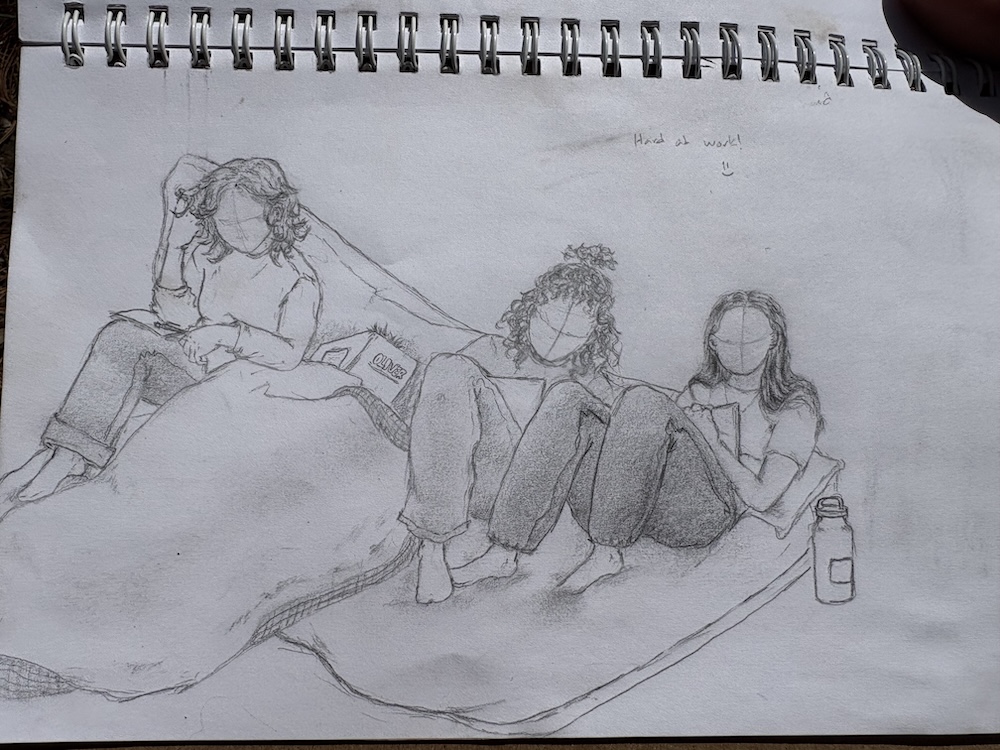
Our time with Grandfather Ray was very well spent. He showed us a canoe that he was making, we got to share lunch with him, we moved and stacked some wood, and of course we listened to all of the marvelous stories he had to share with us. As our time there was coming to an end he made sure that we parted with 3 gifts: 1) The book he wrote called And We Shall Cast Rainbows on the Land: a deep and spiritual book where he shares a lot of his experience and knowledge; 2) The reassurance that if were were ever to be around that we were welcomed to visit and as he would say, “Holla.”; 3) A hug. Then our walk back to our canoes was spent either deep in conversation or deep in thought, but the result seemed to be similar for everybody: the long 200 yard stare that held in it the individual experiences that we each had. And, interestingly enough, Grandfather warned us about the dams ahead: an impending portage that we’d been dreading.
 Piddle paddle the live long day away
Dip your spoon in the soup of the river
Taste its dark water, feel its rushing sway
And though its cold flow might make you shiver
Bathe deep in it and let yourself be clean
The bottoms silt will wash your dirt and scrub your soul,
Then fill with thoughts, the river cleaned the trees,
Grown by water from the same small shrubs
Wave slowly on the untrod rocky banks,
Thin fingers raised in worship to the sky.
Touch them and deep from heart give plenty of thanks
Don’t say it quite, say it with a cry!
~ Rohan
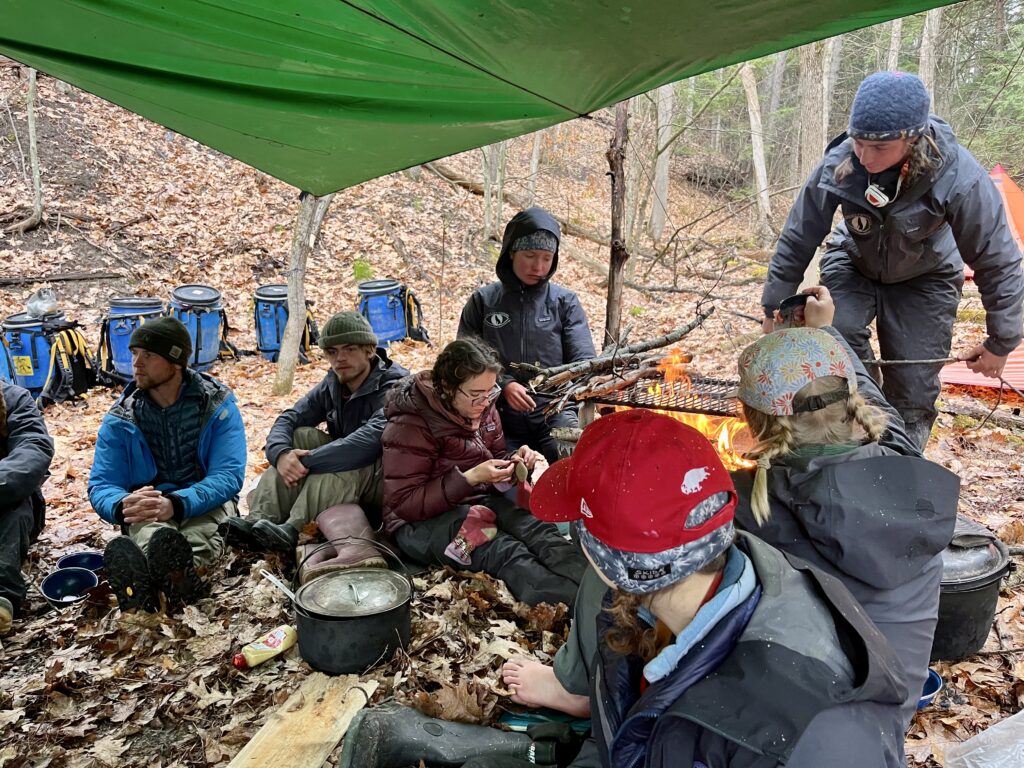
 On May 1st we reached the first of three big and controversial dams that we had to portage around that day. The first dam we went around was quick, smooth and manageable, then we were in our boats again paddling down to our next challenge. The river expeditiously carried us to Winslow. There we unloaded our boats, again, and enjoyed some delicious wraps for lunch. Then the inevitable was here–just as rainy days must come or the sun has to set, our canoes had to be carried 3 miles through Winslow and across the dams. We sang, we laughed, and we nervously crossed roads. Our high spirits carried our gear for us as we finally reached our put in. But this is when it gets really interesting: The amount of gear we take can not be carried or dragged on a one way trip. In that moment we took a deep breath and started our trip back in order to carry the rest of the gear. But, as we made our way back we found out that Ice, Jo’s wife, had just left our resupply and was helping us by taking the rest of our gear in her truck! We will be eternally grateful for the help she gave us. Our triumphant portage concluded with four pints of ice cream. Getting past the dams and so close to the ocean resulted in a big change in our traveling dynamics: tidal changes.
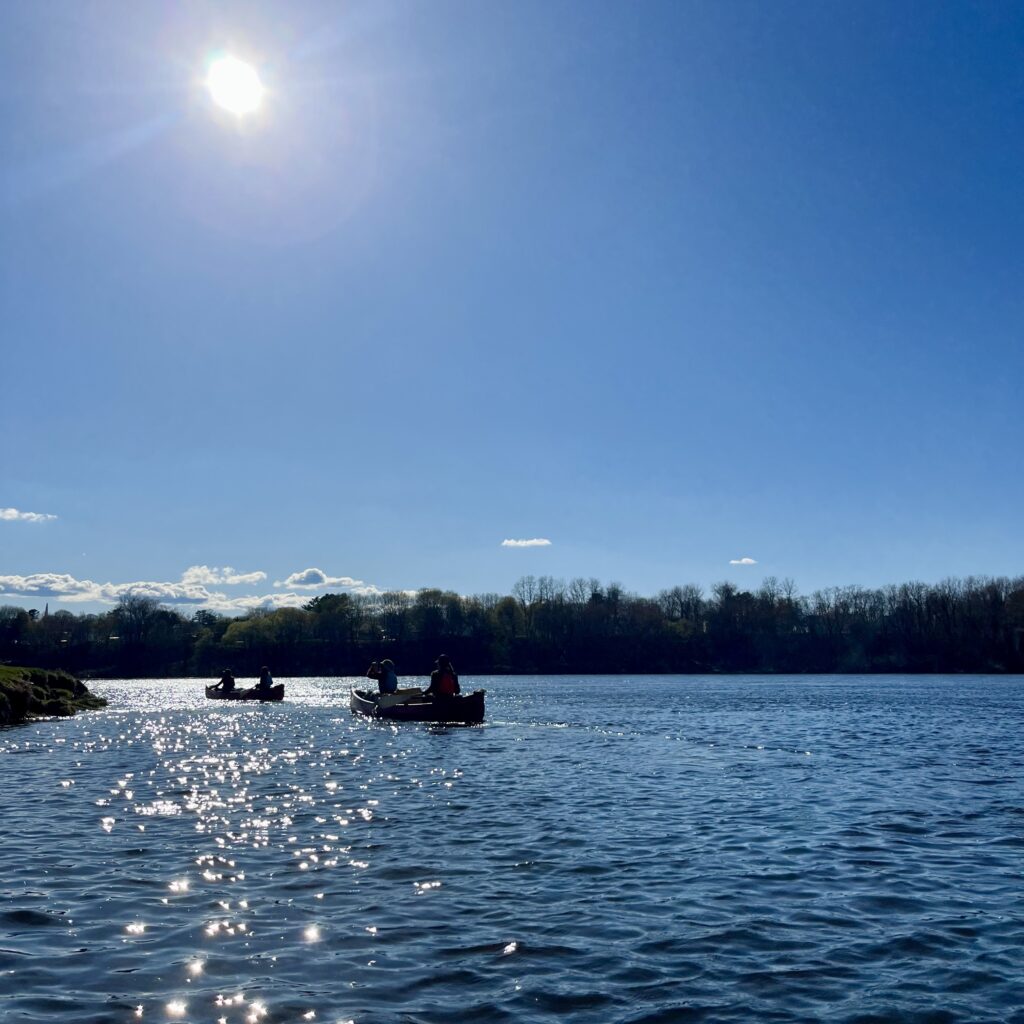
 When the river is relatively close to the ocean the incoming and outgoing tides drastically affect the way in which we travel because the water will either pull us in the right direction or the wrong one. Luckily for us our water manager Kate showed us how this works and when the best time to travel is. In this case, working with the tide would mean starting out a bit earlier and padding slightly harder in the morning. This meant that we arrived very early at camp and enjoyed restful afternoons.
 5/2/26
Paddling day 11, Semester day 111!
Hinkley shoal
23.5 KM paddled
So many bald eagles! Young and old, flying and perching, alone and in pairs. They are so regal. There were also some ospreys, many cormorants on the water, two kingfishers, and seagulls. The tide has risen a lot and quickly since it started coming in. I saw a woodpecker and black slug on my walk. Giant pines and hemlocks up the hill. There were many stumps of huge ones like they had been logged. Booking down the hill the soil surrounding the clear creek is gray and looks clay filled, fiddleheads standing taller here… ~Zahava
***
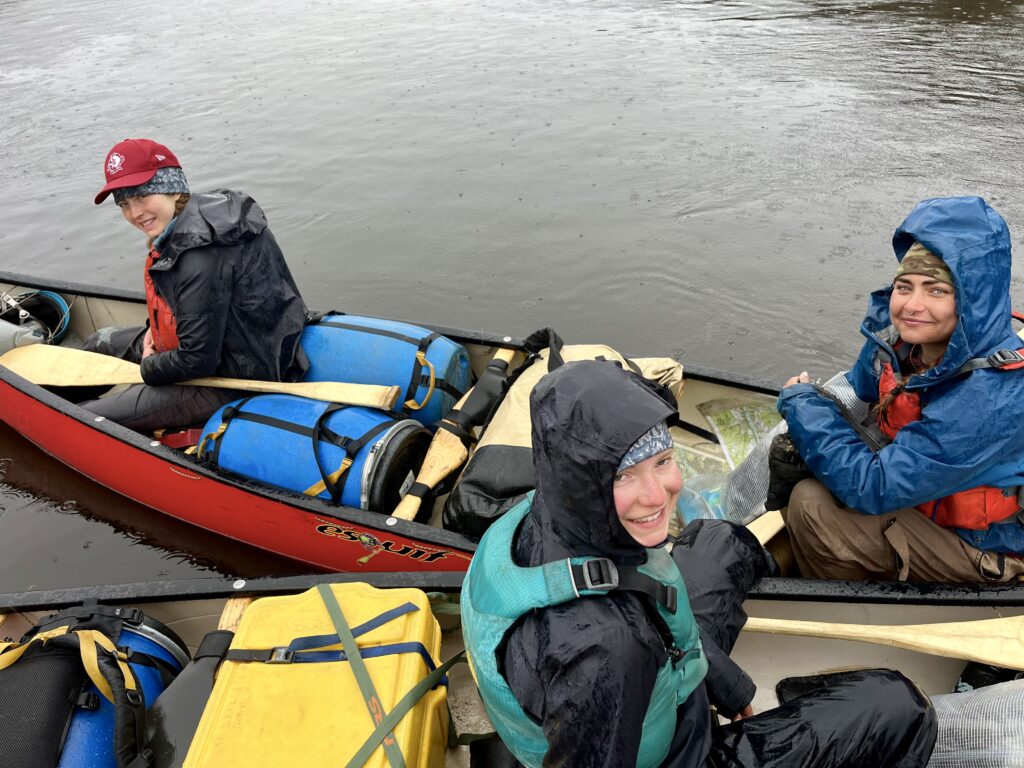
Suddenly, our last day on the Kennebec had arrived, we were going make it to the ocean and say our goodbyes to the canoes. On our last day on the paddling leg we had an independent traveling experience without instructors. This day was ultimately very challenging. It was rainy, cold, windy, and on top of it all we had a short window before the tide shifted. Through the wind and rain we ended up turning a 2 person canoe into a 3 person canoe and towing the solo canoe that we had because the winds were turning the solo canoe into an inefficient and tiring adventure. Finally, on our coldest and wettest moment we reached our destination. Our arrival came with the impending news of a final portage to Stonecipher Farm. We shivered with victorious grins on our faces as we got some help carrying the heavier gear and we ended the expedition with the winds finally blowing the rain away for a sunny afternoon.
 Our time on the river not only exercised our paddling muscles, but just as importantly our minds. We were enchanted with the writing of Daniel Quinn’s book Ishmael, a novel on how to save the world and all the wrong doings of civilization, delivered by an unlikely orator. Many discussions and debates were had on the idea of people being “takers” and “leavers,” and the moral quandaries of how we live. We reflected on our travels down the water ways, how the dams have affected river ecology and anadromous fish migrations, from sea to spawning grounds. We had a lesson about the scientific principles of energy that flows through the river. Through many interesting prompts we reflected on subjects such as the paper mill, dam removals and their efficacy, and we tried to imagine how the river would look without human impact.
Our learning was shaped not only by our thoughtful and insightful instructors, but by the greatest teacher of all: the river.
***
The destruction of this tree was slow, ongoing, necessary. Mother Earth understands death and destruction, not as a bad thing but as a natural force for life to continue. Something that I’ve noticed is that nothing in this world can be exempt from this law. The mink needs to eat the squirrel. Eventually that mink decomposes and turns into an acorn that the squirrel eats. Trees fall in the forest creating new environments and habitats. Businesses change, replacing old for new: adapting. I’m forced to let go of different aspects and versions of who I am in order to change and become new. I understand that all life is merely a result of death, the perfect cycle that I’m a part of. It is useless to reject change in my life when I should embrace it and see what life it brings. Besides, someday I’ll die and become an acorn for a squirrel to eat. ~ Bernie
***
Faster than expected, the paddling leg came to an end and some of us were left wishing for more. In the present moment as we conclude our preparations for the biking we’re all constantly reminiscing on the adventurous time we shared, from being sick together to having deep philosophical conversations; from taking some unintentional swims on the river or warm recreational ones.
The river truly is ever-living and generous, and we’re all very appreciative for that. For now, we send you faithful readers all of our love and soon enough you’ll hear from us again as we miraculously bike our way into the Kroka village.
Your Scribes,
Bernie & Taio